



.svg)
.svg)


Choosing the Ideal Path to Fuller, Natural‑Looking Lips
News
/
April 23, 2026
Lip Augmentation Choices: Fillers, Implants, and Surgical Techniques
Choosing the Ideal Path to Fuller, Natural‑Looking Lips

Body contouring has revolutionized the way we think about self-care and aesthetic transformations. It’s more than just a cosmetic procedure—it’s a path to enhanced confidence and self-expression.
Understanding Lip Augmentation at Dr. Loeb’s Practice
Dr. Thomas W. Loeb’s Manhattan practice offers a full spectrum of lip‑augmentation techniques tailored to each patient’s anatomy and aesthetic goals. Non‑surgical options include FDA‑approved hyaluronic‑acid fillers such as Restylane® and Juvéderm®—which provide immediate, natural‑looking volume lasting 6–12 months and can be dissolved with hyaluronidase if needed. Surgical choices comprise autologous fat grafting (semi‑permanent results of five years or more), permanent silicone or Gore‑Tex implants placed through hidden commissure incisions, and lip‑lift procedures that permanently increase vermilion exposure by removing excess skin. The practice emphasizes a patient‑centered approach: thorough consultations, photographic analysis, and 3‑D simulation ensure realistic expectations and personalized treatment plans. Safety is paramount; all procedures are performed by board‑certified plastic surgeons in accredited facilities, with strict pre‑op screening (smoking cessation, medication review) and post‑op protocols (soft diet, ice, infection monitoring). This combination of expertise and individualized care yields natural, lasting results while minimizing risk.
Comprehensive Overview of Lip Augmentation Types and Techniques
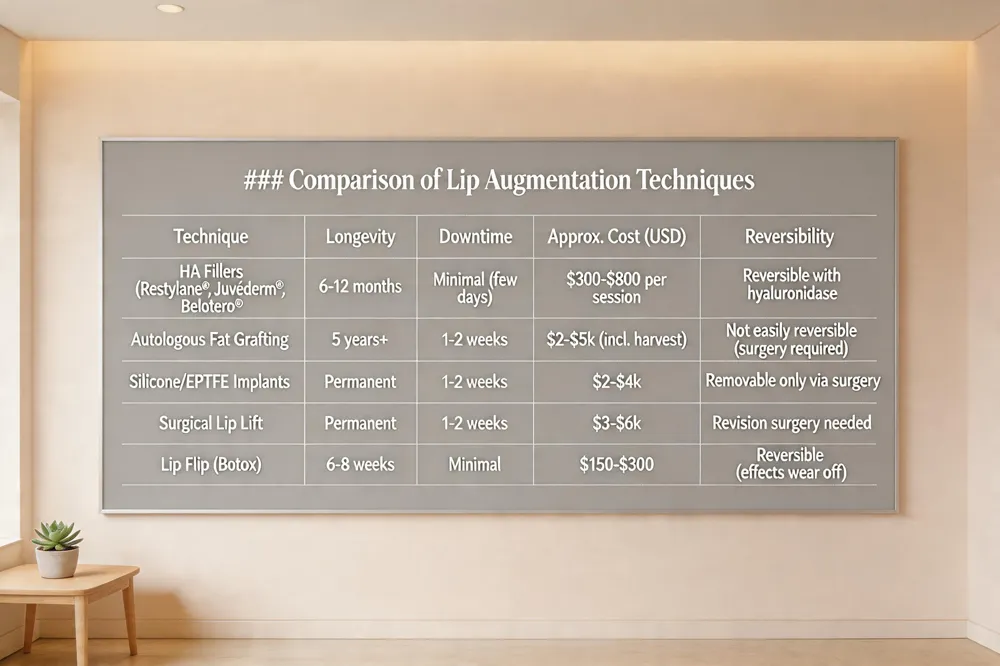 Lip augmentation can be achieved non‑surgically with hyaluronic‑acid (HA) fillers—Restylane®, Juvéderm®, Belotero®—that give immediate volume lasting 6‑12 months and can be dissolved with hyaluronidase. Autologous fat grafting harvests the patient’s own abdominal fat, processes it, and injects it into the lips, offering a semi‑permanent result that often endures five years or more. Permanent solutions include silicone or ePTFE implants placed through tiny incisions at the oral commissures; implants provide lasting shape, are removable, and cost $2‑4 k. Surgical lip lifts (sub‑nasal, bull‑horn, or V‑Y advancement) remove excess skin to elevate the vermilion border, giving a permanent increase in lip height without added volume. Each option balances longevity, downtime, cost, and reversibility, allowing patients—guided by a board‑certified facial plastic surgeon—to select the method that best matches their anatomy and aesthetic goals.
Injectable Fillers: Benefits, Risks, and Choosing the Right Product
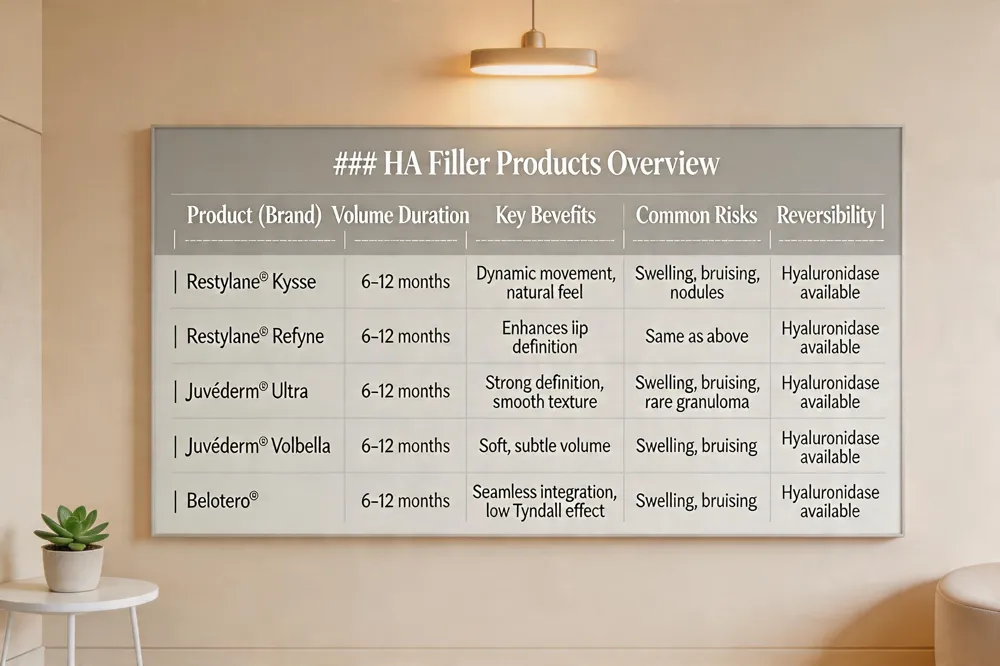 HA fillers are hyaluronic‑acid gels that integrate with lip tissue, giving immediate, natural‑soft volume lasting 6‑12 months. Restylane (Kysse, Refyne) offers movement; Juvederm (Ultra, Volbella) provides stronger definition. Common side effects are swelling, bruising, tenderness and occasional nodules; hyaluronidase can dissolve HA if needed. Fillers give downtime, reversible results and shaping; surgical options (fat grafting, implants, lifts) give longer‑lasting change but require incisions.
Lip fillers vs implants: Fillers are minimally invasive, customizable, and dissolvable, lasting 6‑12 months; implants give permanent shape but involve surgery, cost and infection risk. Patients prefer a healthier, natural look over frozen muscles. Is Juvederm or Kysse better? Kysse offers dynamic enhancement; Juvederm Ultra/Volbella adds noticeable volume. Augmentation versus filler: surgery provides permanent results; fillers are temporary, maintenance. Fat transfer gives fullness with allergy risk. Side effects range from mild swelling to rare infection; proper technique minimizes these.
Surgical Augmentation: Implants, Fat Grafting, Lip Lifts, and Lip Flips
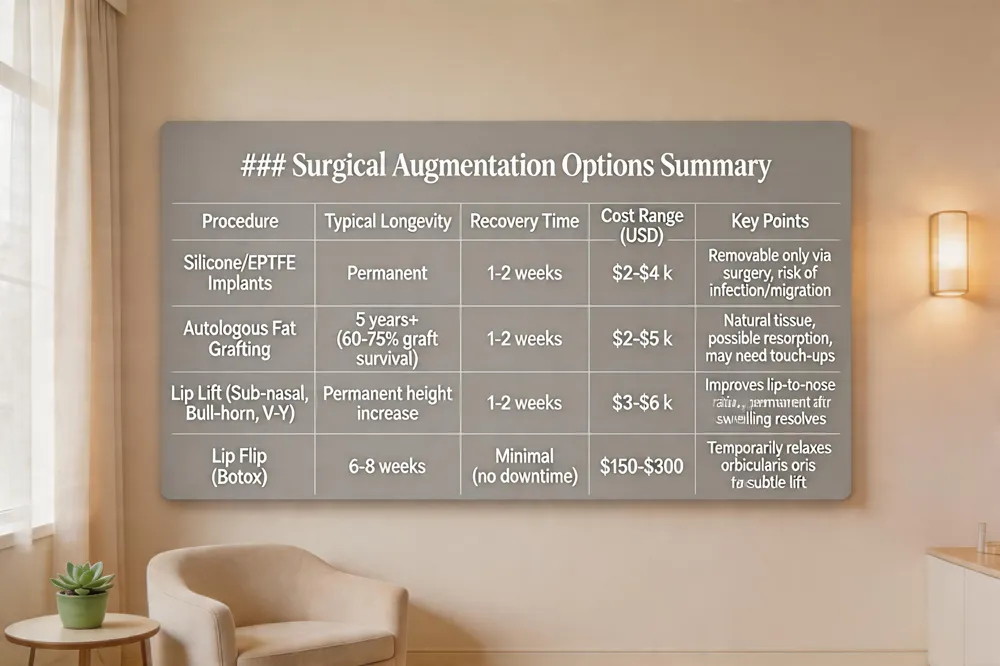 Implant placement and outcomes: Dr. Loeb’s silicone or PTFE implants are inserted through tiny oral‑commissure incisions, creating a smooth, natural‑looking increase in upper and lower lip volume that persists for years. Before‑and‑after photos show balanced, symmetrical contours without over‑filling. Fat graft longevity: Autologous fat transfer harvests abdominal fat, purifies it and injects it into the lips; up to 60‑75% of graft survives, offering semi‑permanent fullness for five years or more, though some reabsorption may require touch‑ups. Lip lift techniques: The V‑Y and bull‑horn lifts remove a small strip of skin beneath the nose, elevating the vermilion border and exposing more pink tissue; results are permanent after swelling subsides in 2‑3 weeks. Lip flip results: Botox relaxation of the orbicularis oris gives a subtle, lifted Cupid’s bow lasting 6‑8 weeks, ideal for patients seeking modest, non‑surgical enhancement.
Choosing the Right Procedure for Bigger Lips
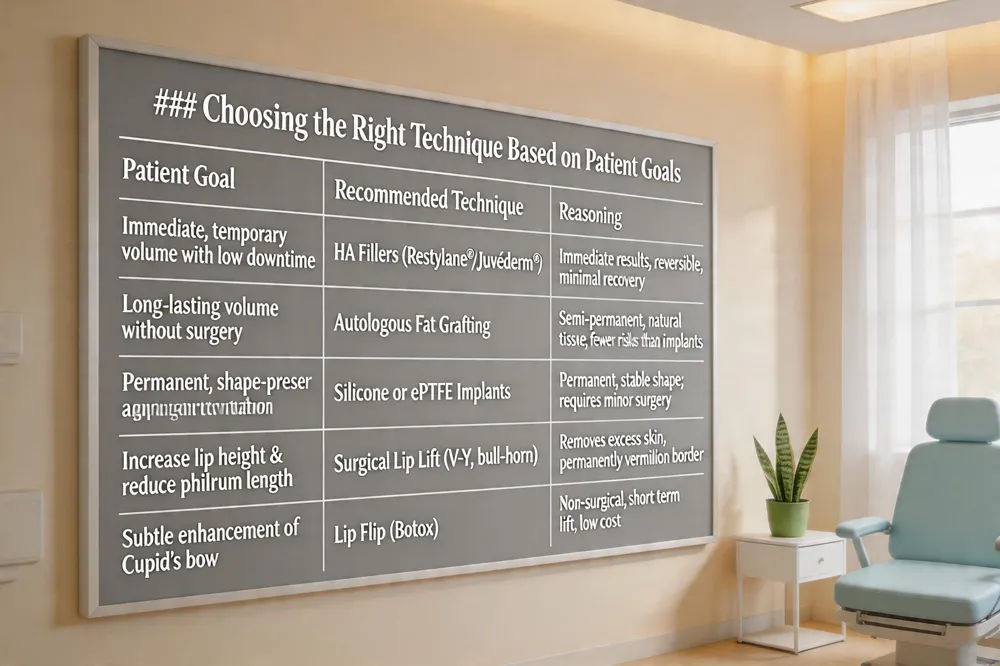 Patient goals and anatomy drive the choice of lip augmentation. Thin lips or long philtrum may benefit from a lip‑lift that shortens the nose‑to‑lip distance, while many patients prefer injectable hyaluronic‑acid fillers for volume that dissolves after 6‑12 months. Temporary options (fillers, calcium hydroxylapatite) offer flexibility and downtime; permanent silicone implants, ePTFE grafts, or autologous fat transfer provide lasting results but require surgery and recovery. A consultation with a board‑certified surgeon is essential to assess health, smoking status, dental alignment, and discuss risks, costs, and maintenance.
What is the best procedure for bigger lips? For most patients, hyaluronic‑acid fillers give immediate fullness with downtime; surgical implants or a lip‑lift are alternatives for those desiring permanence.
Is lip augmentation the same as lip filler? No. Lip augmentation includes any technique—fillers, implants, fat grafts, lifts—while lip filler specifically refers to temporary HA injections.
Post‑Procedure Care and Long‑Term Maintenance
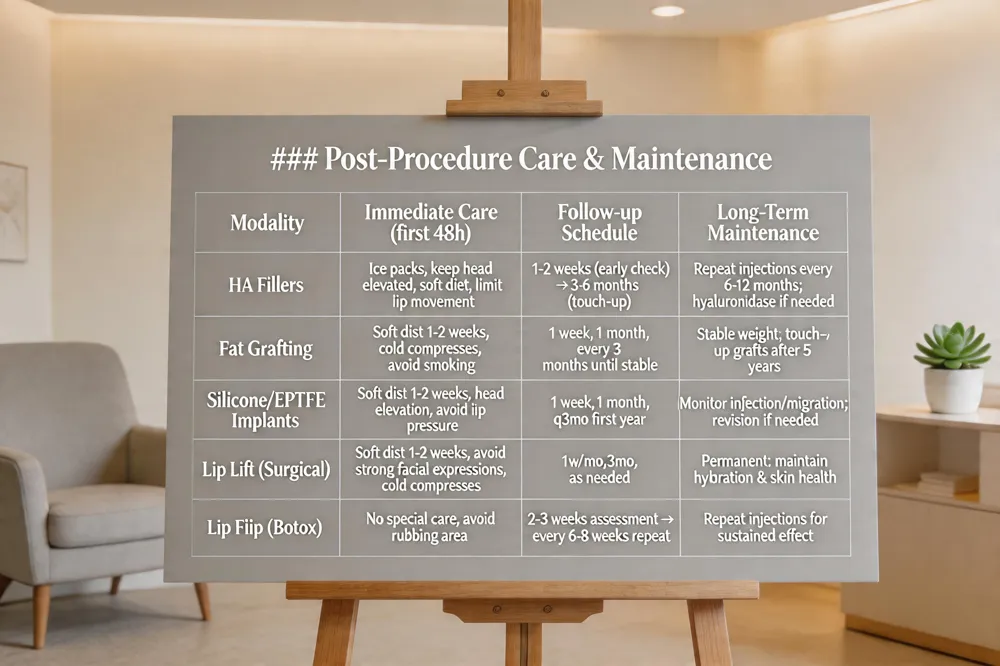 Recovery protocols after lip augmentation depend on the chosen technique. For injectable hyaluronic‑acid fillers, patients typically experience mild swelling, bruising, and tenderness that resolve within 3–7 days; they should eat soft foods, keep the head elevated while sleeping, apply ice, and limit excessive lip movement for the first 24–48 hours. Surgical options—including autologous fat grafting, silicone implants, and lip lifts—require a soft‑diet for 1–2 weeks, avoidance of vigorous facial expressions for several days, and application of cold compresses to reduce swelling. Patients should also discontinue smoking and blood‑thinning medications before and after the procedure to minimize bruising and infection risk.
A structured follow‑up schedule is essential. Most clinicians schedule an initial post‑procedure visit within 1‑2 weeks to assess healing, remove sutures (if present), and address any early complications such as infection, hematoma, or asymmetry. For fillers, a later visit at 3‑6 months may be needed to evaluate volume loss and plan touch‑up injections. Surgical patients are typically seen at 1 week, 1 month, and then at 3‑month intervals until the final contour stabilizes, especially after lip lifts or implant placement.
Maintaining results varies by modality. Fillers require repeat injections every 6‑12 months, as the hyaluronic acid is gradually metabolized; hyaluronidase can dissolve undesired material promptly. Fat grafting offers semi‑permanent volume lasting at least five years, though some resorption may occur; patients are advised to maintain a stable weight, avoid smoking, and consider occasional touch‑up grafts if needed. Silicone or ePTFE implants provide permanent augmentation, but routine monitoring for infection, migration, or palpable edges is advised; any complications may necessitate revision surgery. General lifestyle recommendations—including hydration, a balanced diet, and protection of the lips from extreme temperatures—help preserve tissue health and prolong aesthetic outcomes. Prompt communication with the surgeon is crucial if fever, severe swelling, persistent bruising, or signs of infection develop.
Your Path to Natural, Balanced Lip Harmony
A personalized consultation with a board‑certified facial plastic surgeon is the first step toward achieving harmonious lip enhancement. During this visit, Dr. Thomas W. Loeb reviews your facial proportions, skin quality, and aesthetic goals, using high‑resolution imaging and 3‑D modeling to map a treatment plan that balances volume, shape, and symmetry. Whether you choose reversible hyaluronic‑acid fillers for a six‑to‑twelve‑month result, autologous fat grafting for semi‑permanent enhancement, or permanent silicone implants or a lip lift for lasting structural change, the plan is tailored to your anatomy and lifestyle. Long‑term aesthetic excellence is secured through meticulous technique, sterile operating conditions, and a detailed postoperative protocol that includes soft‑diet guidance, ice application, and scheduled follow‑up visits to monitor healing and maintain optimal outcomes. To begin your journey toward natural, balanced lip harmony, contact Dr. Loeb’s Manhattan boutique practice at (212) 555‑1234 or visit www.drloebplasticsurgery.com.
Understanding Lip Augmentation at Dr. Loeb’s Practice
Dr. Thomas W. Loeb’s Manhattan practice offers a full spectrum of lip‑augmentation techniques tailored to each patient’s anatomy and aesthetic goals. Non‑surgical options include FDA‑approved hyaluronic‑acid fillers such as Restylane® and Juvéderm®—which provide immediate, natural‑looking volume lasting 6–12 months and can be dissolved with hyaluronidase if needed. Surgical choices comprise autologous fat grafting (semi‑permanent results of five years or more), permanent silicone or Gore‑Tex implants placed through hidden commissure incisions, and lip‑lift procedures that permanently increase vermilion exposure by removing excess skin. The practice emphasizes a patient‑centered approach: thorough consultations, photographic analysis, and 3‑D simulation ensure realistic expectations and personalized treatment plans. Safety is paramount; all procedures are performed by board‑certified plastic surgeons in accredited facilities, with strict pre‑op screening (smoking cessation, medication review) and post‑op protocols (soft diet, ice, infection monitoring). This combination of expertise and individualized care yields natural, lasting results while minimizing risk.
Comprehensive Overview of Lip Augmentation Types and Techniques
 Lip augmentation can be achieved non‑surgically with hyaluronic‑acid (HA) fillers—Restylane®, Juvéderm®, Belotero®—that give immediate volume lasting 6‑12 months and can be dissolved with hyaluronidase. Autologous fat grafting harvests the patient’s own abdominal fat, processes it, and injects it into the lips, offering a semi‑permanent result that often endures five years or more. Permanent solutions include silicone or ePTFE implants placed through tiny incisions at the oral commissures; implants provide lasting shape, are removable, and cost $2‑4 k. Surgical lip lifts (sub‑nasal, bull‑horn, or V‑Y advancement) remove excess skin to elevate the vermilion border, giving a permanent increase in lip height without added volume. Each option balances longevity, downtime, cost, and reversibility, allowing patients—guided by a board‑certified facial plastic surgeon—to select the method that best matches their anatomy and aesthetic goals.
Injectable Fillers: Benefits, Risks, and Choosing the Right Product
 HA fillers are hyaluronic‑acid gels that integrate with lip tissue, giving immediate, natural‑soft volume lasting 6‑12 months. Restylane (Kysse, Refyne) offers movement; Juvederm (Ultra, Volbella) provides stronger definition. Common side effects are swelling, bruising, tenderness and occasional nodules; hyaluronidase can dissolve HA if needed. Fillers give downtime, reversible results and shaping; surgical options (fat grafting, implants, lifts) give longer‑lasting change but require incisions.
Lip fillers vs implants: Fillers are minimally invasive, customizable, and dissolvable, lasting 6‑12 months; implants give permanent shape but involve surgery, cost and infection risk. Patients prefer a healthier, natural look over frozen muscles. Is Juvederm or Kysse better? Kysse offers dynamic enhancement; Juvederm Ultra/Volbella adds noticeable volume. Augmentation versus filler: surgery provides permanent results; fillers are temporary, maintenance. Fat transfer gives fullness with allergy risk. Side effects range from mild swelling to rare infection; proper technique minimizes these.
Surgical Augmentation: Implants, Fat Grafting, Lip Lifts, and Lip Flips
 Implant placement and outcomes: Dr. Loeb’s silicone or PTFE implants are inserted through tiny oral‑commissure incisions, creating a smooth, natural‑looking increase in upper and lower lip volume that persists for years. Before‑and‑after photos show balanced, symmetrical contours without over‑filling. Fat graft longevity: Autologous fat transfer harvests abdominal fat, purifies it and injects it into the lips; up to 60‑75% of graft survives, offering semi‑permanent fullness for five years or more, though some reabsorption may require touch‑ups. Lip lift techniques: The V‑Y and bull‑horn lifts remove a small strip of skin beneath the nose, elevating the vermilion border and exposing more pink tissue; results are permanent after swelling subsides in 2‑3 weeks. Lip flip results: Botox relaxation of the orbicularis oris gives a subtle, lifted Cupid’s bow lasting 6‑8 weeks, ideal for patients seeking modest, non‑surgical enhancement.
Choosing the Right Procedure for Bigger Lips
 Patient goals and anatomy drive the choice of lip augmentation. Thin lips or long philtrum may benefit from a lip‑lift that shortens the nose‑to‑lip distance, while many patients prefer injectable hyaluronic‑acid fillers for volume that dissolves after 6‑12 months. Temporary options (fillers, calcium hydroxylapatite) offer flexibility and downtime; permanent silicone implants, ePTFE grafts, or autologous fat transfer provide lasting results but require surgery and recovery. A consultation with a board‑certified surgeon is essential to assess health, smoking status, dental alignment, and discuss risks, costs, and maintenance.
What is the best procedure for bigger lips? For most patients, hyaluronic‑acid fillers give immediate fullness with downtime; surgical implants or a lip‑lift are alternatives for those desiring permanence.
Is lip augmentation the same as lip filler? No. Lip augmentation includes any technique—fillers, implants, fat grafts, lifts—while lip filler specifically refers to temporary HA injections.
Post‑Procedure Care and Long‑Term Maintenance
 Recovery protocols after lip augmentation depend on the chosen technique. For injectable hyaluronic‑acid fillers, patients typically experience mild swelling, bruising, and tenderness that resolve within 3–7 days; they should eat soft foods, keep the head elevated while sleeping, apply ice, and limit excessive lip movement for the first 24–48 hours. Surgical options—including autologous fat grafting, silicone implants, and lip lifts—require a soft‑diet for 1–2 weeks, avoidance of vigorous facial expressions for several days, and application of cold compresses to reduce swelling. Patients should also discontinue smoking and blood‑thinning medications before and after the procedure to minimize bruising and infection risk.
A structured follow‑up schedule is essential. Most clinicians schedule an initial post‑procedure visit within 1‑2 weeks to assess healing, remove sutures (if present), and address any early complications such as infection, hematoma, or asymmetry. For fillers, a later visit at 3‑6 months may be needed to evaluate volume loss and plan touch‑up injections. Surgical patients are typically seen at 1 week, 1 month, and then at 3‑month intervals until the final contour stabilizes, especially after lip lifts or implant placement.
Maintaining results varies by modality. Fillers require repeat injections every 6‑12 months, as the hyaluronic acid is gradually metabolized; hyaluronidase can dissolve undesired material promptly. Fat grafting offers semi‑permanent volume lasting at least five years, though some resorption may occur; patients are advised to maintain a stable weight, avoid smoking, and consider occasional touch‑up grafts if needed. Silicone or ePTFE implants provide permanent augmentation, but routine monitoring for infection, migration, or palpable edges is advised; any complications may necessitate revision surgery. General lifestyle recommendations—including hydration, a balanced diet, and protection of the lips from extreme temperatures—help preserve tissue health and prolong aesthetic outcomes. Prompt communication with the surgeon is crucial if fever, severe swelling, persistent bruising, or signs of infection develop.
Your Path to Natural, Balanced Lip Harmony
A personalized consultation with a board‑certified facial plastic surgeon is the first step toward achieving harmonious lip enhancement. During this visit, Dr. Thomas W. Loeb reviews your facial proportions, skin quality, and aesthetic goals, using high‑resolution imaging and 3‑D modeling to map a treatment plan that balances volume, shape, and symmetry. Whether you choose reversible hyaluronic‑acid fillers for a six‑to‑twelve‑month result, autologous fat grafting for semi‑permanent enhancement, or permanent silicone implants or a lip lift for lasting structural change, the plan is tailored to your anatomy and lifestyle. Long‑term aesthetic excellence is secured through meticulous technique, sterile operating conditions, and a detailed postoperative protocol that includes soft‑diet guidance, ice application, and scheduled follow‑up visits to monitor healing and maintain optimal outcomes. To begin your journey toward natural, balanced lip harmony, contact Dr. Loeb’s Manhattan boutique practice at (212) 555‑1234 or visit www.drloebplasticsurgery.com.
Heading
Understanding Lip Augmentation at Dr. Loeb’s Practice
Dr. Thomas W. Loeb’s Manhattan practice offers a full spectrum of lip‑augmentation techniques tailored to each patient’s anatomy and aesthetic goals. Non‑surgical options include FDA‑approved hyaluronic‑acid fillers such as Restylane® and Juvéderm®—which provide immediate, natural‑looking volume lasting 6–12 months and can be dissolved with hyaluronidase if needed. Surgical choices comprise autologous fat grafting (semi‑permanent results of five years or more), permanent silicone or Gore‑Tex implants placed through hidden commissure incisions, and lip‑lift procedures that permanently increase vermilion exposure by removing excess skin. The practice emphasizes a patient‑centered approach: thorough consultations, photographic analysis, and 3‑D simulation ensure realistic expectations and personalized treatment plans. Safety is paramount; all procedures are performed by board‑certified plastic surgeons in accredited facilities, with strict pre‑op screening (smoking cessation, medication review) and post‑op protocols (soft diet, ice, infection monitoring). This combination of expertise and individualized care yields natural, lasting results while minimizing risk.
Comprehensive Overview of Lip Augmentation Types and Techniques
 Lip augmentation can be achieved non‑surgically with hyaluronic‑acid (HA) fillers—Restylane®, Juvéderm®, Belotero®—that give immediate volume lasting 6‑12 months and can be dissolved with hyaluronidase. Autologous fat grafting harvests the patient’s own abdominal fat, processes it, and injects it into the lips, offering a semi‑permanent result that often endures five years or more. Permanent solutions include silicone or ePTFE implants placed through tiny incisions at the oral commissures; implants provide lasting shape, are removable, and cost $2‑4 k. Surgical lip lifts (sub‑nasal, bull‑horn, or V‑Y advancement) remove excess skin to elevate the vermilion border, giving a permanent increase in lip height without added volume. Each option balances longevity, downtime, cost, and reversibility, allowing patients—guided by a board‑certified facial plastic surgeon—to select the method that best matches their anatomy and aesthetic goals.
Injectable Fillers: Benefits, Risks, and Choosing the Right Product
 HA fillers are hyaluronic‑acid gels that integrate with lip tissue, giving immediate, natural‑soft volume lasting 6‑12 months. Restylane (Kysse, Refyne) offers movement; Juvederm (Ultra, Volbella) provides stronger definition. Common side effects are swelling, bruising, tenderness and occasional nodules; hyaluronidase can dissolve HA if needed. Fillers give downtime, reversible results and shaping; surgical options (fat grafting, implants, lifts) give longer‑lasting change but require incisions.
Lip fillers vs implants: Fillers are minimally invasive, customizable, and dissolvable, lasting 6‑12 months; implants give permanent shape but involve surgery, cost and infection risk. Patients prefer a healthier, natural look over frozen muscles. Is Juvederm or Kysse better? Kysse offers dynamic enhancement; Juvederm Ultra/Volbella adds noticeable volume. Augmentation versus filler: surgery provides permanent results; fillers are temporary, maintenance. Fat transfer gives fullness with allergy risk. Side effects range from mild swelling to rare infection; proper technique minimizes these.
Surgical Augmentation: Implants, Fat Grafting, Lip Lifts, and Lip Flips
 Implant placement and outcomes: Dr. Loeb’s silicone or PTFE implants are inserted through tiny oral‑commissure incisions, creating a smooth, natural‑looking increase in upper and lower lip volume that persists for years. Before‑and‑after photos show balanced, symmetrical contours without over‑filling. Fat graft longevity: Autologous fat transfer harvests abdominal fat, purifies it and injects it into the lips; up to 60‑75% of graft survives, offering semi‑permanent fullness for five years or more, though some reabsorption may require touch‑ups. Lip lift techniques: The V‑Y and bull‑horn lifts remove a small strip of skin beneath the nose, elevating the vermilion border and exposing more pink tissue; results are permanent after swelling subsides in 2‑3 weeks. Lip flip results: Botox relaxation of the orbicularis oris gives a subtle, lifted Cupid’s bow lasting 6‑8 weeks, ideal for patients seeking modest, non‑surgical enhancement.
Choosing the Right Procedure for Bigger Lips
 Patient goals and anatomy drive the choice of lip augmentation. Thin lips or long philtrum may benefit from a lip‑lift that shortens the nose‑to‑lip distance, while many patients prefer injectable hyaluronic‑acid fillers for volume that dissolves after 6‑12 months. Temporary options (fillers, calcium hydroxylapatite) offer flexibility and downtime; permanent silicone implants, ePTFE grafts, or autologous fat transfer provide lasting results but require surgery and recovery. A consultation with a board‑certified surgeon is essential to assess health, smoking status, dental alignment, and discuss risks, costs, and maintenance.
What is the best procedure for bigger lips? For most patients, hyaluronic‑acid fillers give immediate fullness with downtime; surgical implants or a lip‑lift are alternatives for those desiring permanence.
Is lip augmentation the same as lip filler? No. Lip augmentation includes any technique—fillers, implants, fat grafts, lifts—while lip filler specifically refers to temporary HA injections.
Post‑Procedure Care and Long‑Term Maintenance
 Recovery protocols after lip augmentation depend on the chosen technique. For injectable hyaluronic‑acid fillers, patients typically experience mild swelling, bruising, and tenderness that resolve within 3–7 days; they should eat soft foods, keep the head elevated while sleeping, apply ice, and limit excessive lip movement for the first 24–48 hours. Surgical options—including autologous fat grafting, silicone implants, and lip lifts—require a soft‑diet for 1–2 weeks, avoidance of vigorous facial expressions for several days, and application of cold compresses to reduce swelling. Patients should also discontinue smoking and blood‑thinning medications before and after the procedure to minimize bruising and infection risk.
A structured follow‑up schedule is essential. Most clinicians schedule an initial post‑procedure visit within 1‑2 weeks to assess healing, remove sutures (if present), and address any early complications such as infection, hematoma, or asymmetry. For fillers, a later visit at 3‑6 months may be needed to evaluate volume loss and plan touch‑up injections. Surgical patients are typically seen at 1 week, 1 month, and then at 3‑month intervals until the final contour stabilizes, especially after lip lifts or implant placement.
Maintaining results varies by modality. Fillers require repeat injections every 6‑12 months, as the hyaluronic acid is gradually metabolized; hyaluronidase can dissolve undesired material promptly. Fat grafting offers semi‑permanent volume lasting at least five years, though some resorption may occur; patients are advised to maintain a stable weight, avoid smoking, and consider occasional touch‑up grafts if needed. Silicone or ePTFE implants provide permanent augmentation, but routine monitoring for infection, migration, or palpable edges is advised; any complications may necessitate revision surgery. General lifestyle recommendations—including hydration, a balanced diet, and protection of the lips from extreme temperatures—help preserve tissue health and prolong aesthetic outcomes. Prompt communication with the surgeon is crucial if fever, severe swelling, persistent bruising, or signs of infection develop.
Your Path to Natural, Balanced Lip Harmony
A personalized consultation with a board‑certified facial plastic surgeon is the first step toward achieving harmonious lip enhancement. During this visit, Dr. Thomas W. Loeb reviews your facial proportions, skin quality, and aesthetic goals, using high‑resolution imaging and 3‑D modeling to map a treatment plan that balances volume, shape, and symmetry. Whether you choose reversible hyaluronic‑acid fillers for a six‑to‑twelve‑month result, autologous fat grafting for semi‑permanent enhancement, or permanent silicone implants or a lip lift for lasting structural change, the plan is tailored to your anatomy and lifestyle. Long‑term aesthetic excellence is secured through meticulous technique, sterile operating conditions, and a detailed postoperative protocol that includes soft‑diet guidance, ice application, and scheduled follow‑up visits to monitor healing and maintain optimal outcomes. To begin your journey toward natural, balanced lip harmony, contact Dr. Loeb’s Manhattan boutique practice at (212) 555‑1234 or visit www.drloebplasticsurgery.com.





Locations


© 2014 - 2025. Thomas W. Loeb | Board Certified Plastic Surgeon