



.svg)
.svg)


News
/
December 8, 2025
The Importance of Aesthetic Balance in Facial Plastic Surgery
Achieving Natural Beauty Through Facial Harmony and Proportion

Body contouring has revolutionized the way we think about self-care and aesthetic transformations. It’s more than just a cosmetic procedure—it’s a path to enhanced confidence and self-expression.
Understanding Aesthetic Balance in Facial Plastic Surgery
Definition and Goals of Aesthetic Balance
Aesthetic balance in facial plastic surgery means achieving harmony among facial features to create a natural, attractive appearance. Rather than drastically changing a person's look, the aim is to highlight and enhance their inherent beauty through subtle and precise adjustments. This approach respects individual uniqueness and avoids overcorrection or exaggerated alterations.
Importance of Facial Harmony and Proportion
Facial harmony relies on the relationships between features like the nose, chin, cheeks, and jawline. Proportion and symmetry are fundamental, often guided by the "golden ratio"—a mathematical balance considered pleasing to the eye. While perfect symmetry is rare, balanced features significantly improve perceived attractiveness and boost confidence and psychological well-being.
Overview of Facial Balancing Approach
Facial balancing involves a personalized, comprehensive assessment of all facial features, including age-related changes like tissue laxity. Treatment plans may combine surgical options—such as rhinoplasty, facelifts, and implants—and non-surgical procedures like dermal fillers and Botox. Skilled surgeons carefully tailor treatments to each patient’s goals and anatomy to maintain facial integrity and deliver natural results.
This holistic approach ensures enhancements complement the face as a whole, enhancing harmony and proportion rather than isolated changes.
The Principles of Facial Balance and Harmony

Role of facial symmetry and proportions
Facial symmetry and proportions are fundamental to perceived attractiveness. While perfect symmetry is rare, balanced facial features create an appearance that is pleasing to the eye. Minor asymmetries are natural and often preferred, but significant imbalances can detract from facial harmony.
The golden ratio and facial thirds
The golden ratio, approximately 1:1.618, is an ancient mathematical principle often applied to facial aesthetics to guide ideal proportions. This ratio influences the relationships between features such as the eyes, nose, lips, and chin. Additionally, the face is commonly divided vertically into three equal parts—hairline to eyebrows, eyebrows to the base of the nose, and nose to chin—known as facial thirds, which also help assess facial balance.
How balance enhances natural attractiveness
Achieving facial balance enhances natural beauty by harmonizing individual features without drastic changes. When facial proportions and symmetry align with these principles, the overall effect is a more attractive, youthful, and confident appearance. This balanced harmony supports emotional well-being and social confidence, emphasizing subtle facial enhancements over exaggerated alterations.
Comprehensive Assessment for Personalized Facial Balancing

What Does Full-Face Evaluation Entail?
A comprehensive Facial balancing treatments begins with a detailed full-face evaluation. This includes analyzing how all facial features relate to each other, such as the coordination between the chin and nose or the framing of the eyes by the cheeks. Understanding these relationships between facial features is vital in achieving Facial balancing rather than focusing on isolated enhancements. This holistic view helps identify which areas need subtle facial refinement to improve overall balance without altering the person's natural appearance dramatically.
How Are Advanced Imaging and Morphometric Analysis Used?
Modern Facial plastic surgery leverages advanced technologies like digital photography, three-dimensional facial mapping, and Morphometric facial features analysis to precisely measure Facial proportions and aesthetic appeal. These tools quantify facial features relative to established aesthetic principles, including the Golden ratio in beauty, aiding surgeons in planning treatments that best suit individual facial structures. Morphometric facial analysis also considers age-related facial tissue laxity, allowing tailored interventions that address tissue laxity or volume loss.
How Is an Individualized Treatment Plan Developed?
Each patient’s treatment plan is uniquely personalized based on the full-face assessment and imaging data. The plan prioritizes natural results by combining Surgical facial balancing options and Non-surgical facial balancing treatments appropriate to the patient's goals and anatomy. This may include carefully planned sequences of Dermal fillers, Botox treatments, fat transfer, implants, or facelifts. Strategic, staged treatments help prevent overcorrection and maintain natural facial movement, ensuring that enhancements age gracefully over time. Collaborating with a qualified facial plastic surgeon or Consulting board-certified plastic surgeons is essential to develop a nuanced, safe, and effective Facial balancing approach tailored specifically to each individual.
Surgical and Non-Surgical Procedures in Facial Balancing
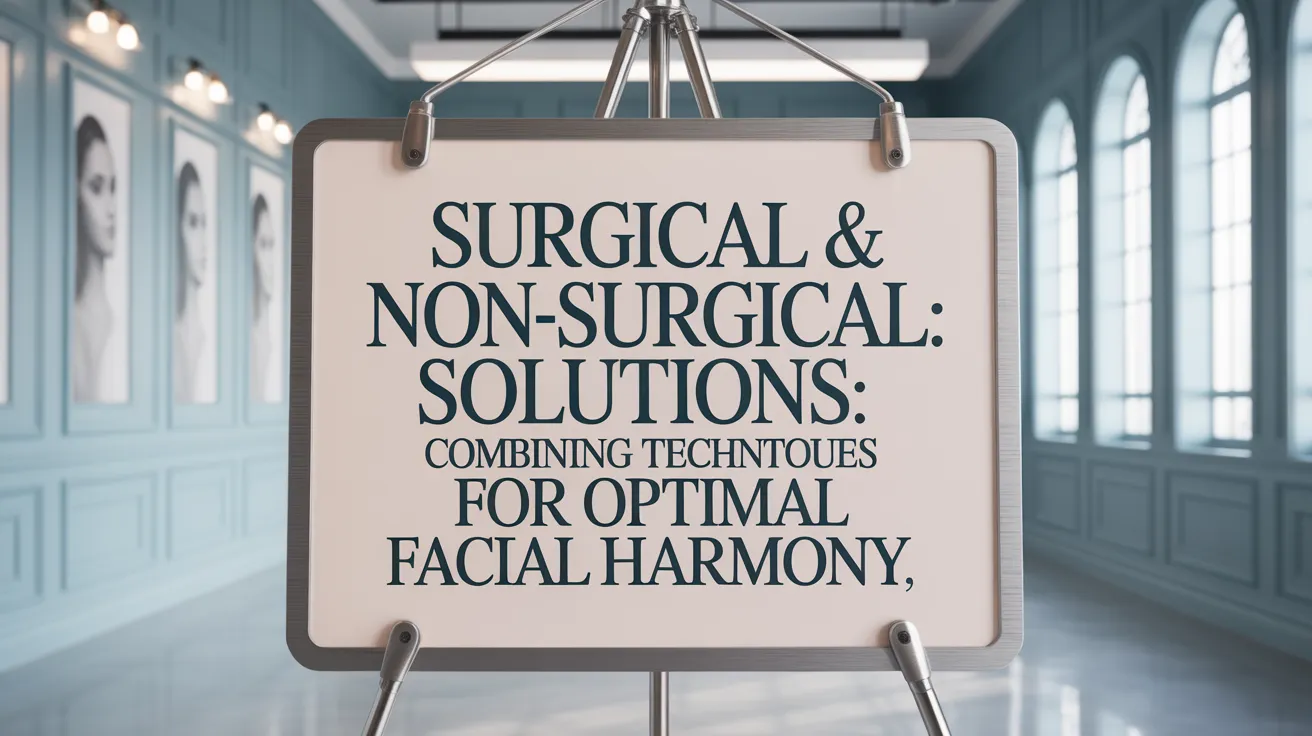
What are common surgical procedures in facial balancing?
Surgical facial balancing options include several well-established procedures aimed at Facial harmony and proportions. Rhinoplasty, commonly known as a nose job, reshapes and corrects nasal features to create balance with other facial parts. Facelifts (rhytidectomy) smooth wrinkles, lift sagging skin, and restore jawline contours for a refreshed appearance. Chin augmentation techniques address a weak or receded chin using implants, bone grafts, or fillers to balance the face's profile and proportions.
Other surgical options include blepharoplasty procedure to correct sagging or puffiness around the eyes, and jawline surgery procedures for redefining or repositioning the jaw. These procedures require skilled surgeons due to delicate anatomy and the necessity for natural results.
What non-surgical options are available for facial balancing?
Non-surgical facial balancing treatments involve minimally invasive treatments that enhance volume, smooth wrinkles, and refine contours. Facial balancing, often using dermal fillers made from hyaluronic acid, is used to restore volume in cheeks, lips, and under the eyes, addressing asymmetries and softening folds. Botox treatments relax targeted muscles to soften wrinkles and improve facial symmetry.
Fat transfer for volume restoration involves harvesting the patient's own fat cells and injecting them to restore volume naturally, creating subtle and lasting improvements.
These treatments are popular for their reduced downtime and gradual enhancements, often used alone or to maintain results from surgery.
How are surgical and non-surgical techniques combined for optimal results?
Facial balancing achieves the most natural and lasting outcomes through a tailored combination of surgical and non-surgical methods. Surgeons develop individualized facial treatment plans that consider each person's unique anatomy and aesthetic goals. For example, a rhinoplasty nasal reshaping might be complemented by chin augmentation to ensure harmonious profile balance, while dermal fillers and Botox can refine and maintain results or address areas not requiring surgery.
Multiple treatment sessions allow gradual improvements, avoiding overdone appearances. This integrative approach prioritizes subtle facial enhancements that preserve individual character while improving proportion and symmetry.
In summary, surgical and non-surgical procedures in facial balancing work hand-in-hand to enhance Facial balancing treatments, ensuring each face looks naturally balanced and refreshed.
Safety and Expertise: Critical Factors in Facial Plastic Surgery

Why Is It Important to Choose a Qualified, Board-Certified Surgeon?
Facial plastic surgery involves delicate procedures that demand advanced surgical skill and deep knowledge of facial anatomy. Board-certified surgeons, such as those certified by the American Board of Facial Cosmetic Surgery certification, have undergone rigorous training and examinations specifically in facial cosmetic and reconstructive procedures. Choosing such qualified professionals ensures that treatment plans are personalized facial treatment plans that are safe and effective, maximizing the likelihood of achieving natural and balanced results without compromising patient health.
What Are the Risks When Treating Sensitive Facial Areas, and How Can They Be Mitigated?
Certain facial regions, like the under-eye area, carry higher risks during treatments. For example, injections with fillers can potentially cause complications such as blindness or contour irregularities if performed improperly. To mitigate these risks, surgeons use precise techniques and select appropriate materials, often combining surgical facial balancing options and non-surgical facial balancing treatments. Careful full-face assessment guiding treatments ensures harmonious results while prioritizing safety. Consulting highly experienced surgeons reduces the chance of adverse events, especially when operating close to nerves and blood vessels. Attention to safety in facial injections and awareness of risks of under-eye injections are key to successful outcomes.
How Does a Surgeon’s Advanced Knowledge of Facial Anatomy Benefit Patients?
Surgeons' intimate understanding of the complex facial structures allows them to customize procedures—whether rhinoplasty nasal reshaping, facelifts, or using hyaluronic acid fillers—to restore or enhance balance and proportion without sacrificing natural appearance. Their expertise helps them anticipate and address age-related facial tissue laxity and variable anatomy, leading to safer surgeries and more gratifying outcomes. Additionally, precise anatomical knowledge supports effective management of complications and enhances postoperative recovery, contributing to the overall well-being and confidence of patients.
Psychological and Functional Benefits of Facial Balancing
How does facial balancing procedures improve self-confidence and emotional well-being?
Facial balancing procedures enhance natural facial harmony and proportions, which can significantly boost self-esteem. Patients often experience Reduced anxiety and depression from surgery, leading to better social interactions and overall emotional health. The subtle, natural results help individuals feel more at ease with their appearance, promoting a positive self-image.
What functional gains can result from facial balancing?
Beyond aesthetic improvements, certain procedures provide important functional benefits. For instance, Upper eyelid blepharoplasty benefits can alleviate vision obstruction caused by droopy eyelids, reducing associated headaches and eye strain. Facelifts restore muscle function and skin comfort, which can lessen irritation and improve daily facial expressions. These functional enhancements contribute to both physical well-being and quality of life.
What is the long-term impact of facial balancing on psychological health and quality of life?
The Psychological benefits of facial surgery are often long-lasting, with improved self-confidence persisting for years after surgery. Enhanced appearance can lead to greater social participation and professional opportunities, enriching life satisfaction. Additionally, many patients report ongoing emotional ease and improved mental health, underscoring the meaningful role facial balancing treatments plays well beyond cosmetic outcomes.
Trends and Future Directions in Facial Plastic Surgery

Growth in Aesthetic Treatments and Demand for Natural Results
Aesthetic facial treatments have seen a significant surge in popularity, with a 41.3% increase in procedures in recent years. The filler market alone grows approximately 9% annually, reflecting a growing demand for maintaining facial proportion and harmony. Patients increasingly seek results that emphasize Enhancing your natural beauty and Facial balancing that prioritize harmony and subtlety rather than dramatic alteration.
Emerging Technologies and Minimally Invasive Methods
Advances in Facial plastic surgeons and aesthetic medicine include the expanded use of injectable fillers, Injectable fillers and Neural Modulators, botulinum toxin therapies, and laser technology in plastic surgery. Minimally invasive techniques like endoscopic surgery in plastic surgery and Medi Threads lifting and tightening offer tissue lifting and tightening with minimal scarring and downtime. These methods appeal to patients seeking Non-surgical facial balancing options with quicker recovery periods, enabling gradual and controlled enhancements that preserve facial expression and movement.
Ongoing Research and Holistic Approaches in Facial Aesthetics
The field continues to evolve with studies focusing on Facial analysis frontal examination, Golden Ratio in facial aesthetics, and comprehensive facial harmony assessment. Integrated Personalized facial treatment plans combine surgical and non-surgical options tailored to individual anatomy and aesthetic goals, ensuring natural outcomes. Additionally, Research in Biomaterials and innovative biomaterials are under investigation to improve longevity and safety. This Impact of facial aesthetic surgery holistic approach supports long-term facial harmony, psychological well-being, and the maintenance of youthful contours through personalized care.
Enhancing Natural Beauty with Balanced Facial Plastic Surgery
The Importance of Facial Harmony
Facial harmony is essential for creating a natural, attractive appearance by balancing features such as the nose, chin, cheeks, and jawline. It focuses on subtle enhancements that preserve individuality while improving proportions and symmetry.
Personalized and Safe Treatment Plans
Each facial balancing approach is carefully tailored to the individual's unique anatomy and goals. This personalized plan often combines surgical and non-surgical options to ensure natural results while prioritizing patient safety, especially in delicate areas.
Seeking Expert Consultation
Consulting with a qualified, board-certified facial plastic surgeon is crucial. Their expertise in facial anatomy and aesthetic techniques ensures safe procedures and helps patients achieve harmonious results that enhance confidence and well-being.
Heading



Locations


© 2014 - 2025. Thomas W. Loeb | Board Certified Plastic Surgeon