



.svg)
.svg)


News
/
December 8, 2025
The Latest Advances in Nasolabial Fold Treatments
Innovative Approaches and Techniques Transforming Nasolabial Fold Correction
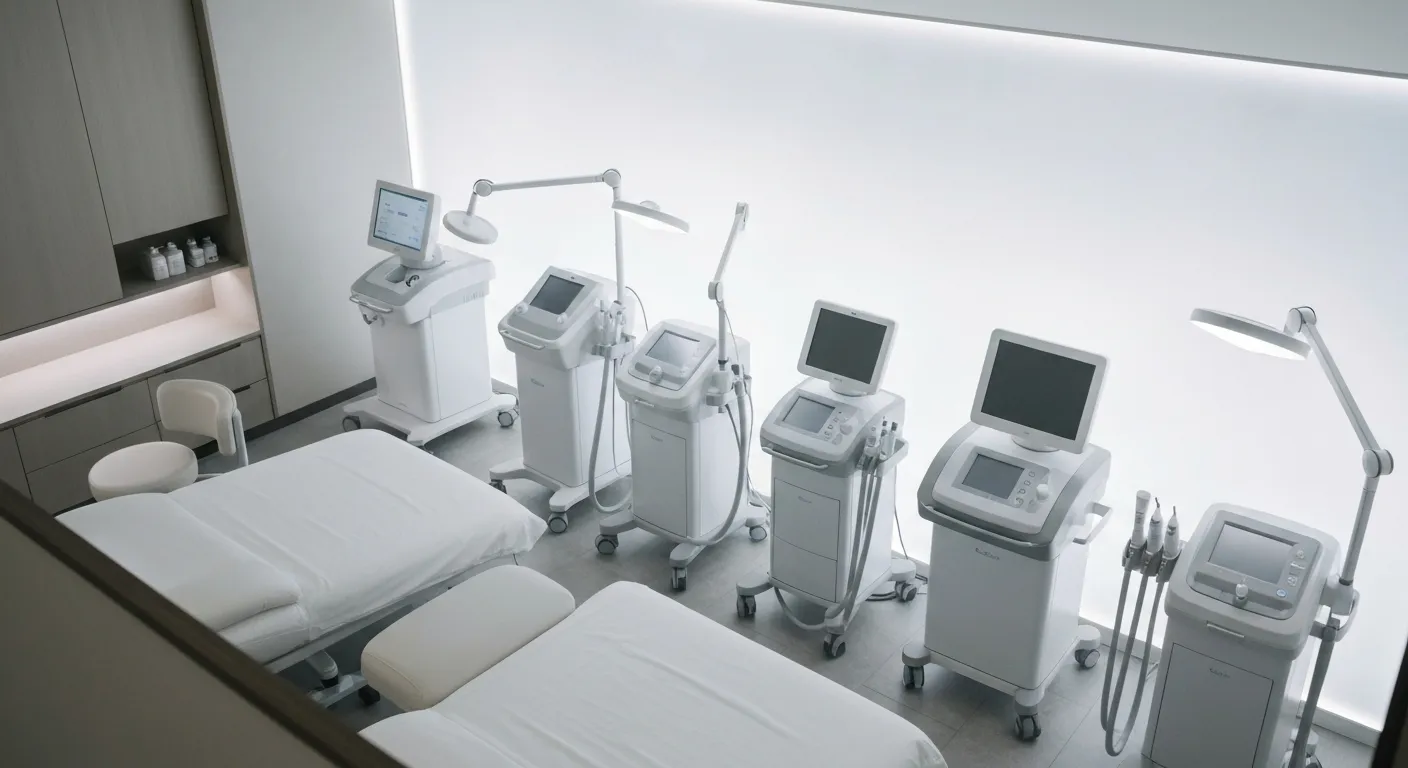
Body contouring has revolutionized the way we think about self-care and aesthetic transformations. It’s more than just a cosmetic procedure—it’s a path to enhanced confidence and self-expression.
Understanding Nasolabial Folds and the Need for Advanced Treatments
Definition and Anatomy of Nasolabial Folds
Nasolabial folds, also known as smile lines or laugh lines, are the natural creases that extend from the sides of the nose to the corners of the mouth. These folds are a structural part of the face and become more prominent with age. They form due to a combination of skin, fat pads, bone structure, and facial muscle movement.
Causes and Aging-Related Changes
Several factors contribute to the deepening of nasolabial folds over time. Aging leads to a loss of collagen and elastin in the skin, reducing its elasticity and firmness. Additionally, volume loss occurs as the facial fat pads diminish and bone resorption takes place, causing the overlying tissue to sag. External influences such as sun damage, smoking, and lifestyle choices can accelerate this process by breaking down supportive skin proteins. Repetitive facial expressions, gravity, and genetics also play significant roles in fold formation.
Importance of Personalized Treatment Plans
Because nasolabial folds result from complex changes affecting skin, fat, and bone, effective treatment requires a personalized approach. Tailored strategies consider the individual’s specific anatomy, degree of volume loss, and aging features. Treatment options range from dermal fillers and collagen stimulators to skin tightening therapies and surgical interventions. A comprehensive assessment ensures that therapies are combined or targeted appropriately, leading to natural, balanced, and long-lasting results while minimizing risks.
Modern Non-Surgical Modalities for Nasolabial Fold Rejuvenation

What are the latest non-surgical treatment options for nasolabial folds?
Modern Non-surgical cheek and nasolabial fold treatments offer effective alternatives to surgery for rejuvenating nasolabial folds, combining immediate results and longer-lasting skin improvements.
Dermal fillers and their advances
Hyaluronic acid fillers for nasolabial folds, such as Juvederm dermal filler use and Restylane dermal filler, remain the cornerstone of non-surgical Dermal fillers for nasolabial folds. These fillers restore volume in the fold area, providing natural-looking, immediate correction with minimal downtime. Advances in filler technology, like crosslinking enhancements and XTR™ technology for HA fillers, have produced stable gels that maintain their effect for up to two years. Some products incorporate lidocaine for increased patient comfort during injections.
Skin tightening technologies: radiofrequency and ultrasound
Radiofrequency (RF) therapies and Ultrasound-based skin therapies work by stimulating Collagen production stimulation deep within the skin. These therapies firm and tighten the tissue surrounding the nasolabial folds and cheeks, reducing sagging and smoothing fine lines. Results typically develop over several months and can last from several months to over a year, depending on treatment protocols and individual response.
Collagen stimulators and their long-lasting effects
Collagen stimulators like Sculptra collagen stimulator (Poly-L-lactic acid treatment) trigger the body's own collagen synthesis over time. Unlike fillers that provide immediate volume, these agents produce gradual improvements in Improving skin texture and volume and Enhancing skin elasticity. Their effects can last two years or more, making them a valuable adjunct or alternative for patients seeking Long-lasting wrinkle reduction without surgery.
Together, these modern treatments offer personalized, Minimally invasive skin treatments options that enhance facial contours, restore youthful volume, and improve skin quality, addressing multiple factors that contribute to nasolabial fold prominence.
Tailored Injection Protocols: The AST Approach to Nasolabial Fold Correction

How does personalized assessment influence nasolabial fold treatment?
Personalized assessment plays a crucial role in treating nasolabial folds. By thoroughly evaluating the fold's etiology and severity, practitioners can implement one of four Assessment, Strategy, and Treatment (AST) Injection Protocols tailored to each patient's unique facial anatomy and aging characteristics. This personalized approach ensures customized filler choice and injection techniques, resulting in natural and long-lasting aesthetic improvements while addressing underlying changes in bone structure, fat volume, and skin laxity.
What are the four distinct AST protocols for nasolabial folds?
The AST system classifies nasolabial folds into four categories, each corresponding to a specific treatment pathway:
AST Protocol 1: Belotero Balance Lidocaine Injection: Targets superficial, skin-related NLFs through direct intradermal or subdermal injections using Belotero Balance Lidocaine (BBL). This addresses early or mild folds caused primarily by skin changes.
AST Protocol 2: Dual-plane Sandwich Technique with Belotero Volume Lidocaine: Applies to patients with midface structural deficiencies like maxillary retrusion. It uses a dual-plane ‘‘sandwich’’ technique injecting Belotero Volume Lidocaine (BVL) in supraperiosteal and subcutaneous layers to restore deep tissue support.
AST Protocol 3: Midface Volume Restoration and NLF Injection: Combines indirect volumization of cheek fat compartments and preauricular hollows with direct NLF injections. This targets volume loss in midface tissues contributing to fold prominence.
AST Protocol 4: Advanced Aging Feature Treatment: Designed for advanced aging signs such as temple volume loss, mandibular bone resorption, and soft-tissue ptosis. It emphasizes volumizing temples, jawline, and deep facial support structures alongside NLF correction.
How are Belotero Balance and Belotero Volume Lidocaine used in these protocols?
Belotero fillers are integral to the AST protocols due to their safety and performance profile:
- Belotero Balance Lidocaine and Belotero Volume Lidocaine: Belotero Balance Lidocaine (BBL) is ideal for superficial to mid-depth injections, focusing on skin layer support to smooth fine folds (Protocols 1). Belotero Volume Lidocaine (BVL) is suitable for deeper tissue augmentation, restoring volume to underlying bone or fat deficits (Protocols 2, 3, and 4).
Injecting precise volumes at targeted depths allows for both direct fold filling and indirect facial contour lifting.
Why combine direct and indirect injection techniques?
Combining direct filler placement into the nasolabial folds with indirect volumization of adjacent areas like the cheeks and lateral midface improves treatment outcomes. Indirect augmentation lifts and supports soft tissue, reducing fold depth by repositioning facial structures. This holistic approach addresses the multifactorial changes behind NLF development, resulting in:
- Enhanced cheek projection
- Shallower folds
- Improved submalar contour
- Overall facial rejuvenation
What are the safety considerations and clinical outcomes of AST protocols?
AST protocols emphasize safe injection techniques, including use of microdroplet delivery and blunt cannulas, minimizing risks such as vascular occlusion. Clinical studies report visible improvement in fold severity, skin smoothness, and facial harmony at 30 days post-treatment, with sustained natural-looking results. The protocols also promote patient-specific strategies balancing outcomes and minimizing adverse events.
| AST Protocol | Target Condition | Filler Type | Injection Approach |
|---|---|---|---|
| 1 | Superficial skin-type NLFs | Belotero Balance Lidocaine | Intradermal/subdermal direct |
| 2 | Bone retrusion and volume loss | Belotero Volume Lidocaine | Dual-plane deep injection |
| 3 | Midface volume deficiency | Belotero Volume Lidocaine | Indirect midface + direct NLFs |
| 4 | Advanced aging signs | Belotero Volume Lidocaine | Volumizing temples/jawline + NLF |
This personalized, methodical approach offers a comprehensive solution to nasolabial folds by addressing underlying anatomical and aging factors effectively.
Advanced Hyaluronic Acid Fillers and Their Technological Innovations

What advancements exist in hyaluronic acid fillers for nasolabial folds?
Recent innovations in hyaluronic acid fillers for facial rejuvenation have significantly improved treatment outcomes for nasolabial folds. One notable advancement is the introduction of XTR™ technology for HA fillers, a multi-phase manufacturing process. This process involves pretreatment, crosslinking with BDDE, and purification, resulting in stable, three-dimensional structured gels. These gels exhibit superior properties such as higher viscosity, cohesivity, and elastic modulus, which enhance filler performance by providing natural-looking and long-lasting volume restoration.
How does Definisse Restore + Lidocaine perform clinically?
Definisse Restore + Lidocaine, an HA filler made using XTR™ technology, has demonstrated excellent clinical efficacy and safety. Studies report significant improvements in wrinkle severity and aesthetic appearance of nasolabial folds, with effects lasting up to six months post-treatment. Patients consistently show high satisfaction levels measured by visual analogue scales (VAS). The safety profile is favorable, with only minor, transient bruising and no serious complications observed, as detailed in treatment outcomes for nasolabial folds.
What properties impact the clinical performance of HA fillers?
Three key physical properties determine how an HA filler performs in nasolabial fold treatment:
- Viscosity: Affects how well the filler maintains shape and resists deformation.
- Cohesivity: Influences the ability of the gel to stay together and resist spreading.
- Elastic modulus (G'): Reflects the gel's firmness and lifting capacity.
Fillers with balanced levels of these properties can provide better tissue integration, natural movement with facial expressions, and durable volume correction, as explained under physical properties affecting HA filler performance.
What about patient satisfaction and duration of results?
Patients receiving XTR™ technology-based HA fillers like Definisse Restore report immediate and noticeable improvements in nasolabial fold appearance. Satisfaction remains high at follow-ups up to six months after treatment. These fillers offer a reliable option for individuals seeking non-surgical rejuvenation with results that combine safety, natural aesthetics, and durability, further supported by data on patient satisfaction with HA filler treatment.
Emerging Injectable Alternatives: Polycaprolactone Versus Poly-L-Lactic Acid
Comparison between PCL and PLLA in reducing NLF severity
Polycaprolactone (PCL) injections have demonstrated superior effectiveness in reducing the severity of Nasolabial folds compared to poly-L-lactic acid (PLLA). Clinical studies show that patients treated with PCL experience significantly greater improvements in wrinkle depth and appearance at multiple follow-up points.
Duration and extent of wrinkle improvement
PCL not only achieves better wrinkle reduction but also sustains these results longer, maintaining improvements up to 12 months post-treatment. This extended duration outperforms PLLA, which typically shows earlier decline in efficacy, making PCL a more durable option for Nasolabial fold correction.
Patient satisfaction and safety profiles
Patients receiving PCL injections report higher satisfaction levels, as measured by validated scales, reflecting improved aesthetic outcomes. Safety results from comparative studies reveal that PCL and PLLA have similar profiles, with no significant differences in injection site reactions or adverse effects. This suggests that PCL offers a safe and effective alternative with enhanced performance for patients seeking nasolabial fold treatments.
Together, these findings highlight Polycaprolactone as a promising injectable filler alternative superior to traditional PLLA, offering longer-lasting wrinkle improvement and greater patient approval without compromising safety.
Combination Approaches and Adjunct Therapies Enhancing Nasolabial Fold Treatment

How do combination therapies improve nasolabial fold treatment outcomes?
Combination therapies enhance nasolabial fold treatment by addressing multiple factors contributing to fold formation and skin aging. Dermal fillers , typically hyaluronic acid-based, restore volume and smooth deep creases immediately.
Adding neurotoxins like Botox complements fillers by relaxing muscles around the mouth that contract and deepen folds. This combined approach reduces dynamic wrinkles and prolongs the youthful appearance.
Skin Quality Improvement with Microneedling and Laser Resurfacing
Microneedling stimulates Collagen and elastin production stimulation through controlled skin injury, improving skin texture and firmness around nasolabial folds with a series of treatments.
Laser resurfacing, including Fractional non-ablative laser use, SmartSkin® CO2 laser benefits, Erbium:YAG laser for lighter skin , promotes deeper collagen remodeling and skin regeneration. These therapies soften nasolabial folds by enhancing skin elasticity and tone over time, making them excellent adjuncts to volume restoration.
Non-Invasive Skin Tightening and Collagen Stimulation
Non-surgical options such as Radiofrequency (RF) therapies, Ultrasound-based skin therapies (e.g., Thermage, Ultherapy) heat the deeper layers of the skin, stimulating collagen synthesis. This firming effect tightens tissues and reduces sagging contributing to fold prominence.
Collagen stimulators like Sculptra collagen stimulator can gradually improve skin texture and volume by encouraging the body’s own collagen production, yielding longer-lasting skin improvements.
Supportive Facial Exercises and Skincare
Facial exercises targeting muscles around the mouth may help reduce fold prominence by strengthening and tightening these muscles, though scientific evidence is limited.
Consistent skincare using products containing hyaluronic acid, antioxidants, and sun protection supports skin hydration and slows collagen breakdown, complementing procedural treatments.
Together, these combination approaches provide a holistic strategy to nasolabial fold management by enhancing and prolonging aesthetic results with minimal invasiveness.
Safety, Practitioner Expertise, and Maintenance of Results in Nasolabial Fold Treatment

What safety considerations should patients be aware of?
Choosing a practitioner with extensive experience and deep knowledge of facial anatomy is crucial for safe and effective Dermal fillers for nasolabial folds. Skilled injectors minimize risks such as bruising, swelling, tenderness, lumps, and asymmetry. They also reduce the chance of rare but serious complications like vascular occlusion, which requires immediate medical attention.
Hyaluronic acid (HA) fillers are the most commonly used substances and offer an added safety advantage—they can be reversed using hyaluronidase if results are unsatisfactory or complications arise. This reversibility provides a valuable safeguard for patients.
Post-treatment care is important for healing and includes avoiding strenuous activity, applying ice, maintaining head elevation, and gentle massage as advised by the practitioner. These steps help limit swelling and bruising.
How long do the results last, and is maintenance required?
Results from Hyaluronic acid fillers for facial rejuvenation typically appear immediately, with full aesthetic effects visible within 1 to 2 weeks after injection. The longevity of results generally ranges from 6 to 18 months, depending on the filler type, injection technique, and individual metabolism.
Because the treatment effects are temporary, regular maintenance sessions are necessary to sustain the improvements. Many patients schedule follow-up procedures every year or when signs of volume loss reappear to maintain a youthful and smooth facial contour.
In summary, safe Dermal fillers for nasolabial folds depends on choosing a qualified injector, understanding the minimal yet possible risks, adhering to post-care instructions, and committing to periodic treatments to preserve results.
Future Perspectives in Nasolabial Fold Correction: Integrating Innovation and Personalization
Advancements in Filler Technologies and Injection Protocols
The field of nasolabial fold correction continues to evolve with new filler technologies providing enhanced durability and aesthetic outcomes. Innovations like XTR™ hyaluronic acid fillers bring high-viscosity and cohesive gels, allowing better volumization and natural results lasting up to two years. Concurrently, refined injection protocols, such as multilayer microdroplet techniques and personalized Assessment, Strategy, and Treatment (AST) protocols, enable practitioners to tailor treatments precisely to each patient's facial anatomy and aging patterns.
Holistic Rejuvenation with Combination Therapies
A comprehensive approach that integrates dermal fillers with skin tightening procedures (radiofrequency, ultrasound, and laser therapies), collagen stimulators like Sculptra, and neurotoxins is gaining favor. These combination treatments not only smooth nasolabial folds but also improve skin elasticity, texture, and underlying structural support, ensuring balanced facial harmony rather than isolated correction.
Personalization for Natural and Lasting Results
Understanding the multifactorial causes of nasolabial folds—ranging from volume loss to bone resorption and soft tissue ptosis—is critical. Customized treatment plans that include midface volumization and indirect augmentation help restore youthful contours and prevent the overfilled or unnatural appearance. Emphasis on subtle, anatomically-informed filler placement is essential for maintaining individual facial identity.
Patient Education and Enhanced Safety Measures
With increasing options available, educating patients about realistic outcomes, procedural steps, potential side effects, and post-treatment care is vital. Continued advancements in injection techniques and filler formulations have improved safety profiles, reducing risks such as bruising and vascular complications. Ultimately, expertise of board-certified practitioners remains indispensable for achieving safe, effective, and satisfying results.
Heading





Locations


© 2014 - 2025. Thomas W. Loeb | Board Certified Plastic Surgeon