



.svg)
.svg)


Cheek Enhancements: A Guide to Choosing Between Permanent Implants and Temporary Fillers
News
/
April 29, 2026
Cheek Augmentation: When to Choose Implants Over Fillers
Cheek Enhancements: A Guide to Choosing Between Permanent Implants and Temporary Fillers
Body contouring has revolutionized the way we think about self-care and aesthetic transformations. It’s more than just a cosmetic procedure—it’s a path to enhanced confidence and self-expression.
Navigating Your Cheek Augmentation Journey
The Core Divide: Implants vs. Fillers
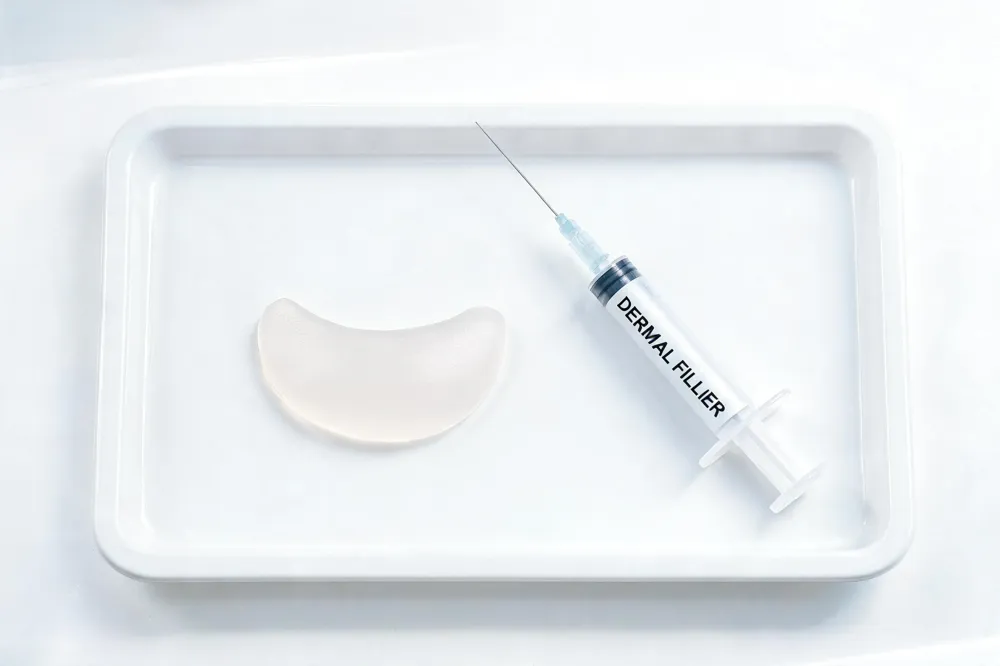
The choice between cheek implants and dermal fillers begins with understanding their fundamental difference. Cheek implants are solid, biocompatible devices, most commonly silicone, surgically placed over the cheekbone to provide a permanent, structural change to the underlying facial skeleton. In contrast, dermal fillers are gel-like substances, typically hyaluronic acid, that are injected beneath the skin to restore volume and contour temporarily. This distinction defines every subsequent consideration, from the procedure itself to the longevity of your results.
Aligning Your Goals with the Right Option
Your personal aesthetic goals are the most critical factor in this decision. Patients seeking a permanent, dramatic enhancement—often those with genetically flat cheekbones or those who have enjoyed significant volume loss correction with fillers—are typically ideal candidates for implants. The one-time surgical commitment offers a stable, long-term solution without the need for ongoing maintenance. Conversely, fillers are a superior choice for those desiring flexibility, a subtle volume boost, or a trial run before considering surgery. They allow you to assess the aesthetic change and, because hyaluronic acid fillers are reversible, adjust or dissolve the results if desired. The key is to match your primary goal—permanence or flexibility—with the corresponding approach. A consultation with an experienced, board-certified surgeon will help determine which path best aligns with your facial anatomy and long-term vision.
Implants vs. Fillers: Defining the Core Difference

What is the difference between cheek implants and fillers?
The fundamental difference lies in their permanence and approach. Cheek implants are solid, medical-grade silicone or porous polyethylene devices placed surgically over the cheekbone. They provide a permanent, structural change that lasts a lifetime, designed to be a one-time solution for significant augmentation.
Fillers, conversely, are injectable gels—most commonly hyaluronic acid (HA), a substance naturally found in the body. They are injected into the cheek tissue to restore lost volume or create subtle lift. Their effect is temporary, as the body gradually absorbs the gel over 6 to 18 months, offering flexibility and the option to adjust results over time. This also means fillers are reversible, as HA fillers can be dissolved with a specific enzyme.
| Feature | Cheek Implants | Dermal Fillers |
|---|---|---|
| Permanence | Permanent | Temporary (6-18 months) |
| Procedure | Surgical placement | Non-surgical injection |
| Primary Material | Silicone or porous polyethylene | Hyaluronic acid (most common) |
| Outcome | Structural, dramatic change | Volume restoration, subtle lift |
| Reversibility | Requires another surgery | Dissolvable or wears off naturally |
When a Permanent Solution Wins: The Case for Cheek Implants

How are cheek implants inserted, and what are they made of?
Cheek implants are small prosthetics, most commonly made of solid medical-grade silicone, designed to mimic the feel of a natural cheekbone. Other biocompatible materials include porous polyethylene (Medpor) and Gore-Tex, but solid silicone is preferred for its durability and the ease with which it can be placed or removed.
The surgical procedure typically takes one to two hours. The surgeon creates a discreet incision, most often inside the mouth along the upper gum line, which leaves no visible external scar. Alternate incisions may be made in the lower eyelid. The surgeon then creates a pocket directly over the cheekbone and secures the implant in place, where it will provide stable, permanent projection.
Do cheek implants ever look natural, or do they look fake?
The key to a natural-looking result is surgical precision. A skilled, board-certified surgeon will select the correct implant shape and size from various options, including malar, submalar, and combined types, to harmonize with the patient’s unique facial structure. When placed correctly, the implant subtly enhances the cheekbone’s contour, creating a balanced, youthful appearance that looks like natural anatomy rather than an artificial addition.
Is it safe for someone over 70 to consider a facelift or cheek augmentation?
Overall health, not age, is the primary safety factor for surgical procedures. Many patients over 70 are in excellent health and undergo successful cheek implant surgery. A thorough medical evaluation with a board-certified surgeon is essential to confirm candidacy. The permanent structural support of an implant offers a particularly effective solution for older patients seeking to correct significant, age-related volume loss.
The Permanent Solution
Cheek implants provide a one-time, permanent correction for genetic flatness and severe volume loss. They offer a stable structural foundation that fillers cannot match for dramatic augmentation and eliminate the ongoing cost and maintenance of repeated filler sessions. While implant surgery has a longer initial recovery period of several weeks, for the right candidate, the long-term convenience and result are superior.
The Allure of Flexibility: The Case for Cheek Fillers
I apologize, but the markdown text to rewrite was not provided. Please include the text so I can add the appropriate links.
The Financial Crossroads: Cost and Long-Term Value

How much do cheek fillers and implants cost?
A single session of dermal fillers for the cheeks typically costs $1,000–$2,500, which covers 2-4 syringes. This price represents an initial, lower up-front investment. In contrast, cheek implant surgery is a one-time expense ranging from $4,000 to $8,000, with the national average around $8,795. This includes surgeon fees, anesthesia, and the implant itself.
Short-Term Gain vs. Long-Term Value
The true financial picture emerges over time. Because filler results are temporary, lasting 12-24 months, maintaining cheek volume requires regular sessions. Over a 5- to 10-year period, the cumulative cost of repeated filler injections often surpasses the one-time cost of implant surgery. For patients seeking a permanent, maintenance-free result, the higher initial cost of implants can be a more cost-effective long-term investment.
| Cheek Augmentation | Initial Cost | Maintenance Requirements | Long-Term (10-Year) Cost Range |
|---|---|---|---|
| Dermal Fillers | $1,000 – $2,500 per session | Annual to biannual touch-ups | $10,000 – $40,000+ |
| Cheek Implants | $4,000 – $8,000 (avg. $8,795) | None | $4,000 – $8,000 |
Making the Final Decision: A Personalized Approach
Making the Final Decision: A Personalized Approach
Decision factors including the desired enhancement level, time horizon, financial strategy, risk tolerance, and reversibility priority guide the choice between surgical and non-surgical options for cheek augmentation.
Cheek fillers are optimal for patients seeking temporary enhancement, modest volume restoration, or a non-surgical trial before committing to permanent surgery. They are also ideal for those averse to invasive procedures or significant downtime.
Surgical implants are superior for individuals with severe cheek deficiency, offering permanent structural changes and eliminating ongoing maintenance costs for superior long-term economic value. This option suits patients willing to undergo a brief recovery period.
A combined approach is also possible; implants provide a stable structural foundation, while fillers add customizable refinement to achieve balanced facial harmony and precise contouring details.
A professional consultation with a board-certified facial plastic surgeon, such as Dr. Thomas W. Loeb in New York City, is essential. The surgeon evaluates bone structure, skin quality, and aesthetic goals to recommend the most appropriate modality for authentic results.
| Enhancement Approach | Ideal Candidate Profile | Key Advantage |
|---|---|---|
| Cheek Fillers | Modest volume loss, non-surgical preference | Reversible trial, minimal downtime |
| Cheek Implants | Severe deficiency, permanent results | Long-term value, structural definition |
| Combined Approach | Precise contouring needs | Foundation with customizable refinement |
Your Path to Harmonious Cheek Aesthetics
Choosing between cheek implants and dermal fillers is about aligning your personal aesthetic goals with the practical realities of each procedure. Both methods are safe and effective, but they offer fundamentally different experiences in terms of permanence, cost, recovery, and the type of change they create.
Defining Your Aesthetic Goal
The first step is understanding what you wish to achieve. Are you looking to restore volume lost to aging, or do you desire a structural change to enhance naturally flat cheekbones?
- For age-related volume loss: Dermal fillers are often the ideal first choice. They are designed to restore the fullness and lift that diminishes over time, providing a refreshed, youthful look without surgery.
- For structural enhancement: If you have genetically flat cheekbones or desire a more dramatic, angular contour, cheek implants can create a permanent structural change that fillers cannot replicate.
Matching the Method to Your Ideal Outcome
Your desired longevity, tolerance for downtime, and budget will guide your decision. The table below outlines the core differences.
| Feature | Cheek Implants | Dermal Fillers |
|---|---|---|
| Duration of Results | Permanent | Temporary (12–24 months) |
| Procedure | Surgery (1–2 hours) | Injection (15–60 minutes) |
| Recovery & Downtime | 1–6 weeks of healing | Minimal to no downtime |
| Cost Profile | High upfront ($4,000–$8,000) | Lower per session ($1,000–$2,500), higher over time |
| Reversibility | Requires another surgery | Wears off naturally or can be dissolved |
| Enhancement Level | Dramatic, structural change | Subtle to moderate volume restoration |
A board-certified facial plastic surgeon can evaluate your facial anatomy, skin quality, and aesthetic desires to recommend the most appropriate path. They might suggest a staged approach, starting with fillers as a trial before committing to permanent implants.
Navigating Your Cheek Augmentation Journey
The Core Divide: Implants vs. Fillers
The choice between cheek implants and dermal fillers begins with understanding their fundamental difference. Cheek implants are solid, biocompatible devices, most commonly silicone, surgically placed over the cheekbone to provide a permanent, structural change to the underlying facial skeleton. In contrast, dermal fillers are gel-like substances, typically hyaluronic acid, that are injected beneath the skin to restore volume and contour temporarily. This distinction defines every subsequent consideration, from the procedure itself to the longevity of your results.
Aligning Your Goals with the Right Option
Your personal aesthetic goals are the most critical factor in this decision. Patients seeking a permanent, dramatic enhancement—often those with genetically flat cheekbones or those who have enjoyed significant volume loss correction with fillers—are typically ideal candidates for implants. The one-time surgical commitment offers a stable, long-term solution without the need for ongoing maintenance. Conversely, fillers are a superior choice for those desiring flexibility, a subtle volume boost, or a trial run before considering surgery. They allow you to assess the aesthetic change and, because hyaluronic acid fillers are reversible, adjust or dissolve the results if desired. The key is to match your primary goal—permanence or flexibility—with the corresponding approach. A consultation with an experienced, board-certified surgeon will help determine which path best aligns with your facial anatomy and long-term vision.
Implants vs. Fillers: Defining the Core Difference
What is the difference between cheek implants and fillers?
The fundamental difference lies in their permanence and approach. Cheek implants are solid, medical-grade silicone or porous polyethylene devices placed surgically over the cheekbone. They provide a permanent, structural change that lasts a lifetime, designed to be a one-time solution for significant augmentation.
Fillers, conversely, are injectable gels—most commonly hyaluronic acid (HA), a substance naturally found in the body. They are injected into the cheek tissue to restore lost volume or create subtle lift. Their effect is temporary, as the body gradually absorbs the gel over 6 to 18 months, offering flexibility and the option to adjust results over time. This also means fillers are reversible, as HA fillers can be dissolved with a specific enzyme.
| Feature | Cheek Implants | Dermal Fillers |
|---|---|---|
| Permanence | Permanent | Temporary (6-18 months) |
| Procedure | Surgical placement | Non-surgical injection |
| Primary Material | Silicone or porous polyethylene | Hyaluronic acid (most common) |
| Outcome | Structural, dramatic change | Volume restoration, subtle lift |
| Reversibility | Requires another surgery | Dissolvable or wears off naturally |
When a Permanent Solution Wins: The Case for Cheek Implants
How are cheek implants inserted, and what are they made of?
Cheek implants are small prosthetics, most commonly made of solid medical-grade silicone, designed to mimic the feel of a natural cheekbone. Other biocompatible materials include porous polyethylene (Medpor) and Gore-Tex, but solid silicone is preferred for its durability and the ease with which it can be placed or removed.
The surgical procedure typically takes one to two hours. The surgeon creates a discreet incision, most often inside the mouth along the upper gum line, which leaves no visible external scar. Alternate incisions may be made in the lower eyelid. The surgeon then creates a pocket directly over the cheekbone and secures the implant in place, where it will provide stable, permanent projection.
Do cheek implants ever look natural, or do they look fake?
The key to a natural-looking result is surgical precision. A skilled, board-certified surgeon will select the correct implant shape and size from various options, including malar, submalar, and combined types, to harmonize with the patient’s unique facial structure. When placed correctly, the implant subtly enhances the cheekbone’s contour, creating a balanced, youthful appearance that looks like natural anatomy rather than an artificial addition.
Is it safe for someone over 70 to consider a facelift or cheek augmentation?
Overall health, not age, is the primary safety factor for surgical procedures. Many patients over 70 are in excellent health and undergo successful cheek implant surgery. A thorough medical evaluation with a board-certified surgeon is essential to confirm candidacy. The permanent structural support of an implant offers a particularly effective solution for older patients seeking to correct significant, age-related volume loss.
The Permanent Solution
Cheek implants provide a one-time, permanent correction for genetic flatness and severe volume loss. They offer a stable structural foundation that fillers cannot match for dramatic augmentation and eliminate the ongoing cost and maintenance of repeated filler sessions. While implant surgery has a longer initial recovery period of several weeks, for the right candidate, the long-term convenience and result are superior.
The Allure of Flexibility: The Case for Cheek Fillers
I apologize, but the markdown text to rewrite was not provided. Please include the text so I can add the appropriate links.
The Financial Crossroads: Cost and Long-Term Value
How much do cheek fillers and implants cost?
A single session of dermal fillers for the cheeks typically costs $1,000–$2,500, which covers 2-4 syringes. This price represents an initial, lower up-front investment. In contrast, cheek implant surgery is a one-time expense ranging from $4,000 to $8,000, with the national average around $8,795. This includes surgeon fees, anesthesia, and the implant itself.
Short-Term Gain vs. Long-Term Value
The true financial picture emerges over time. Because filler results are temporary, lasting 12-24 months, maintaining cheek volume requires regular sessions. Over a 5- to 10-year period, the cumulative cost of repeated filler injections often surpasses the one-time cost of implant surgery. For patients seeking a permanent, maintenance-free result, the higher initial cost of implants can be a more cost-effective long-term investment.
| Cheek Augmentation | Initial Cost | Maintenance Requirements | Long-Term (10-Year) Cost Range |
|---|---|---|---|
| Dermal Fillers | $1,000 – $2,500 per session | Annual to biannual touch-ups | $10,000 – $40,000+ |
| Cheek Implants | $4,000 – $8,000 (avg. $8,795) | None | $4,000 – $8,000 |
Making the Final Decision: A Personalized Approach
Making the Final Decision: A Personalized Approach
Decision factors including the desired enhancement level, time horizon, financial strategy, risk tolerance, and reversibility priority guide the choice between surgical and non-surgical options for cheek augmentation.
Cheek fillers are optimal for patients seeking temporary enhancement, modest volume restoration, or a non-surgical trial before committing to permanent surgery. They are also ideal for those averse to invasive procedures or significant downtime.
Surgical implants are superior for individuals with severe cheek deficiency, offering permanent structural changes and eliminating ongoing maintenance costs for superior long-term economic value. This option suits patients willing to undergo a brief recovery period.
A combined approach is also possible; implants provide a stable structural foundation, while fillers add customizable refinement to achieve balanced facial harmony and precise contouring details.
A professional consultation with a board-certified facial plastic surgeon, such as Dr. Thomas W. Loeb in New York City, is essential. The surgeon evaluates bone structure, skin quality, and aesthetic goals to recommend the most appropriate modality for authentic results.
| Enhancement Approach | Ideal Candidate Profile | Key Advantage |
|---|---|---|
| Cheek Fillers | Modest volume loss, non-surgical preference | Reversible trial, minimal downtime |
| Cheek Implants | Severe deficiency, permanent results | Long-term value, structural definition |
| Combined Approach | Precise contouring needs | Foundation with customizable refinement |
Your Path to Harmonious Cheek Aesthetics
Choosing between cheek implants and dermal fillers is about aligning your personal aesthetic goals with the practical realities of each procedure. Both methods are safe and effective, but they offer fundamentally different experiences in terms of permanence, cost, recovery, and the type of change they create.
Defining Your Aesthetic Goal
The first step is understanding what you wish to achieve. Are you looking to restore volume lost to aging, or do you desire a structural change to enhance naturally flat cheekbones?
- For age-related volume loss: Dermal fillers are often the ideal first choice. They are designed to restore the fullness and lift that diminishes over time, providing a refreshed, youthful look without surgery.
- For structural enhancement: If you have genetically flat cheekbones or desire a more dramatic, angular contour, cheek implants can create a permanent structural change that fillers cannot replicate.
Matching the Method to Your Ideal Outcome
Your desired longevity, tolerance for downtime, and budget will guide your decision. The table below outlines the core differences.
| Feature | Cheek Implants | Dermal Fillers |
|---|---|---|
| Duration of Results | Permanent | Temporary (12–24 months) |
| Procedure | Surgery (1–2 hours) | Injection (15–60 minutes) |
| Recovery & Downtime | 1–6 weeks of healing | Minimal to no downtime |
| Cost Profile | High upfront ($4,000–$8,000) | Lower per session ($1,000–$2,500), higher over time |
| Reversibility | Requires another surgery | Wears off naturally or can be dissolved |
| Enhancement Level | Dramatic, structural change | Subtle to moderate volume restoration |
A board-certified facial plastic surgeon can evaluate your facial anatomy, skin quality, and aesthetic desires to recommend the most appropriate path. They might suggest a staged approach, starting with fillers as a trial before committing to permanent implants.
Heading
Navigating Your Cheek Augmentation Journey
The Core Divide: Implants vs. Fillers
The choice between cheek implants and dermal fillers begins with understanding their fundamental difference. Cheek implants are solid, biocompatible devices, most commonly silicone, surgically placed over the cheekbone to provide a permanent, structural change to the underlying facial skeleton. In contrast, dermal fillers are gel-like substances, typically hyaluronic acid, that are injected beneath the skin to restore volume and contour temporarily. This distinction defines every subsequent consideration, from the procedure itself to the longevity of your results.
Aligning Your Goals with the Right Option
Your personal aesthetic goals are the most critical factor in this decision. Patients seeking a permanent, dramatic enhancement—often those with genetically flat cheekbones or those who have enjoyed significant volume loss correction with fillers—are typically ideal candidates for implants. The one-time surgical commitment offers a stable, long-term solution without the need for ongoing maintenance. Conversely, fillers are a superior choice for those desiring flexibility, a subtle volume boost, or a trial run before considering surgery. They allow you to assess the aesthetic change and, because hyaluronic acid fillers are reversible, adjust or dissolve the results if desired. The key is to match your primary goal—permanence or flexibility—with the corresponding approach. A consultation with an experienced, board-certified surgeon will help determine which path best aligns with your facial anatomy and long-term vision.
Implants vs. Fillers: Defining the Core Difference
What is the difference between cheek implants and fillers?
The fundamental difference lies in their permanence and approach. Cheek implants are solid, medical-grade silicone or porous polyethylene devices placed surgically over the cheekbone. They provide a permanent, structural change that lasts a lifetime, designed to be a one-time solution for significant augmentation.
Fillers, conversely, are injectable gels—most commonly hyaluronic acid (HA), a substance naturally found in the body. They are injected into the cheek tissue to restore lost volume or create subtle lift. Their effect is temporary, as the body gradually absorbs the gel over 6 to 18 months, offering flexibility and the option to adjust results over time. This also means fillers are reversible, as HA fillers can be dissolved with a specific enzyme.
| Feature | Cheek Implants | Dermal Fillers |
|---|---|---|
| Permanence | Permanent | Temporary (6-18 months) |
| Procedure | Surgical placement | Non-surgical injection |
| Primary Material | Silicone or porous polyethylene | Hyaluronic acid (most common) |
| Outcome | Structural, dramatic change | Volume restoration, subtle lift |
| Reversibility | Requires another surgery | Dissolvable or wears off naturally |
When a Permanent Solution Wins: The Case for Cheek Implants
How are cheek implants inserted, and what are they made of?
Cheek implants are small prosthetics, most commonly made of solid medical-grade silicone, designed to mimic the feel of a natural cheekbone. Other biocompatible materials include porous polyethylene (Medpor) and Gore-Tex, but solid silicone is preferred for its durability and the ease with which it can be placed or removed.
The surgical procedure typically takes one to two hours. The surgeon creates a discreet incision, most often inside the mouth along the upper gum line, which leaves no visible external scar. Alternate incisions may be made in the lower eyelid. The surgeon then creates a pocket directly over the cheekbone and secures the implant in place, where it will provide stable, permanent projection.
Do cheek implants ever look natural, or do they look fake?
The key to a natural-looking result is surgical precision. A skilled, board-certified surgeon will select the correct implant shape and size from various options, including malar, submalar, and combined types, to harmonize with the patient’s unique facial structure. When placed correctly, the implant subtly enhances the cheekbone’s contour, creating a balanced, youthful appearance that looks like natural anatomy rather than an artificial addition.
Is it safe for someone over 70 to consider a facelift or cheek augmentation?
Overall health, not age, is the primary safety factor for surgical procedures. Many patients over 70 are in excellent health and undergo successful cheek implant surgery. A thorough medical evaluation with a board-certified surgeon is essential to confirm candidacy. The permanent structural support of an implant offers a particularly effective solution for older patients seeking to correct significant, age-related volume loss.
The Permanent Solution
Cheek implants provide a one-time, permanent correction for genetic flatness and severe volume loss. They offer a stable structural foundation that fillers cannot match for dramatic augmentation and eliminate the ongoing cost and maintenance of repeated filler sessions. While implant surgery has a longer initial recovery period of several weeks, for the right candidate, the long-term convenience and result are superior.
The Allure of Flexibility: The Case for Cheek Fillers
I apologize, but the markdown text to rewrite was not provided. Please include the text so I can add the appropriate links.
The Financial Crossroads: Cost and Long-Term Value
How much do cheek fillers and implants cost?
A single session of dermal fillers for the cheeks typically costs $1,000–$2,500, which covers 2-4 syringes. This price represents an initial, lower up-front investment. In contrast, cheek implant surgery is a one-time expense ranging from $4,000 to $8,000, with the national average around $8,795. This includes surgeon fees, anesthesia, and the implant itself.
Short-Term Gain vs. Long-Term Value
The true financial picture emerges over time. Because filler results are temporary, lasting 12-24 months, maintaining cheek volume requires regular sessions. Over a 5- to 10-year period, the cumulative cost of repeated filler injections often surpasses the one-time cost of implant surgery. For patients seeking a permanent, maintenance-free result, the higher initial cost of implants can be a more cost-effective long-term investment.
| Cheek Augmentation | Initial Cost | Maintenance Requirements | Long-Term (10-Year) Cost Range |
|---|---|---|---|
| Dermal Fillers | $1,000 – $2,500 per session | Annual to biannual touch-ups | $10,000 – $40,000+ |
| Cheek Implants | $4,000 – $8,000 (avg. $8,795) | None | $4,000 – $8,000 |
Making the Final Decision: A Personalized Approach
Making the Final Decision: A Personalized Approach
Decision factors including the desired enhancement level, time horizon, financial strategy, risk tolerance, and reversibility priority guide the choice between surgical and non-surgical options for cheek augmentation.
Cheek fillers are optimal for patients seeking temporary enhancement, modest volume restoration, or a non-surgical trial before committing to permanent surgery. They are also ideal for those averse to invasive procedures or significant downtime.
Surgical implants are superior for individuals with severe cheek deficiency, offering permanent structural changes and eliminating ongoing maintenance costs for superior long-term economic value. This option suits patients willing to undergo a brief recovery period.
A combined approach is also possible; implants provide a stable structural foundation, while fillers add customizable refinement to achieve balanced facial harmony and precise contouring details.
A professional consultation with a board-certified facial plastic surgeon, such as Dr. Thomas W. Loeb in New York City, is essential. The surgeon evaluates bone structure, skin quality, and aesthetic goals to recommend the most appropriate modality for authentic results.
| Enhancement Approach | Ideal Candidate Profile | Key Advantage |
|---|---|---|
| Cheek Fillers | Modest volume loss, non-surgical preference | Reversible trial, minimal downtime |
| Cheek Implants | Severe deficiency, permanent results | Long-term value, structural definition |
| Combined Approach | Precise contouring needs | Foundation with customizable refinement |
Your Path to Harmonious Cheek Aesthetics
Choosing between cheek implants and dermal fillers is about aligning your personal aesthetic goals with the practical realities of each procedure. Both methods are safe and effective, but they offer fundamentally different experiences in terms of permanence, cost, recovery, and the type of change they create.
Defining Your Aesthetic Goal
The first step is understanding what you wish to achieve. Are you looking to restore volume lost to aging, or do you desire a structural change to enhance naturally flat cheekbones?
- For age-related volume loss: Dermal fillers are often the ideal first choice. They are designed to restore the fullness and lift that diminishes over time, providing a refreshed, youthful look without surgery.
- For structural enhancement: If you have genetically flat cheekbones or desire a more dramatic, angular contour, cheek implants can create a permanent structural change that fillers cannot replicate.
Matching the Method to Your Ideal Outcome
Your desired longevity, tolerance for downtime, and budget will guide your decision. The table below outlines the core differences.
| Feature | Cheek Implants | Dermal Fillers |
|---|---|---|
| Duration of Results | Permanent | Temporary (12–24 months) |
| Procedure | Surgery (1–2 hours) | Injection (15–60 minutes) |
| Recovery & Downtime | 1–6 weeks of healing | Minimal to no downtime |
| Cost Profile | High upfront ($4,000–$8,000) | Lower per session ($1,000–$2,500), higher over time |
| Reversibility | Requires another surgery | Wears off naturally or can be dissolved |
| Enhancement Level | Dramatic, structural change | Subtle to moderate volume restoration |
A board-certified facial plastic surgeon can evaluate your facial anatomy, skin quality, and aesthetic desires to recommend the most appropriate path. They might suggest a staged approach, starting with fillers as a trial before committing to permanent implants.





Locations


© 2014 - 2025. Thomas W. Loeb | Board Certified Plastic Surgeon