



.svg)
.svg)


News
/
December 8, 2025
How Technology is Advancing Facial Plastic Surgery
Revolutionizing Aesthetics: The Cutting-Edge Technologies Shaping Facial Plastic Surgery
Body contouring has revolutionized the way we think about self-care and aesthetic transformations. It’s more than just a cosmetic procedure—it’s a path to enhanced confidence and self-expression.
Introduction to Technological Innovations in Facial Plastic Surgery
Transforming Facial Plastic Surgery with Technology
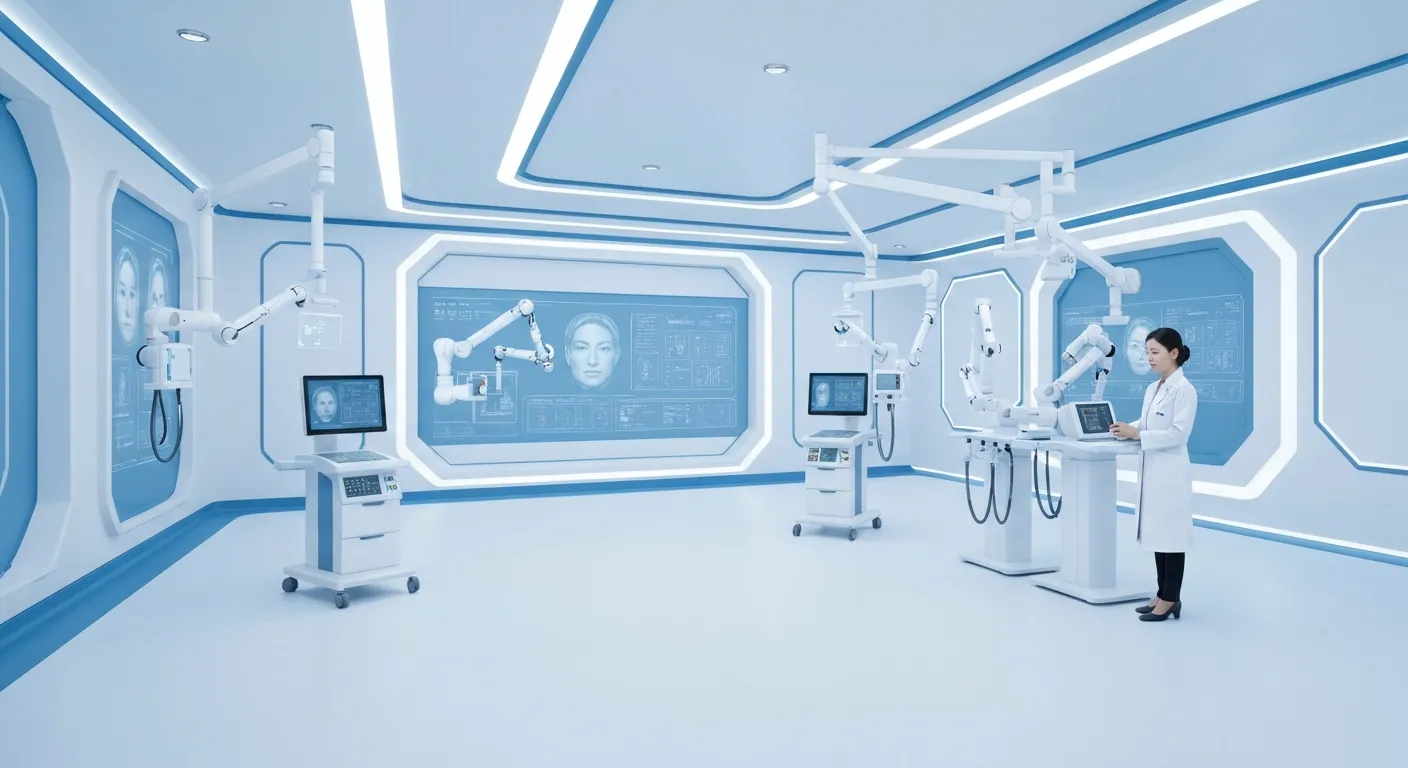
Technology has profoundly reshaped facial plastic surgery, enhancing both the safety and effectiveness of procedures. The integration of advanced tools such as 3D imaging, AI-powered planning, and regenerative medicine allows surgeons to tailor treatments with unprecedented precision.
Improving Patient Outcomes and Safety
Innovations including ultrasonic-assisted liposuction, injectable biostimulants, and tissue engineering have led to safer surgeries, minimizing risks and reducing recovery times. These technologies also enable more predictable results, contributing to higher patient satisfaction.
Moving Toward Minimally Invasive and Natural Enhancements
The field is shifting away from overt alterations toward subtler, natural-looking improvements. Minimally invasive procedures like thread lifts, liquid rhinoplasty, and laser therapies are increasingly popular, offering subtle rejuvenation with less downtime. This trend reflects a broader patient demand for treatments that enhance natural beauty and maintain authentic facial expressions.
Advanced Imaging and 3D Planning for Precision and Personalization
How is 3D imaging used in surgical planning?
3D imaging in plastic surgery provides detailed, rotatable visualizations of a patient's anatomy, allowing surgeons to plan procedures with unparalleled accuracy. Patients can see realistic previews of potential outcomes, improving communication and managing expectations. This personalization reduces the need for revisions and enhances patient confidence.
How are machine learning and AI technologies integrated into facial plastic surgery?
Machine learning algorithms are increasingly incorporated into digital surgical models to enhance precision and reproducibility. Artificial intelligence in plastic surgery assists in preoperative planning by analyzing patient data, predicting outcomes, and customizing approaches to individual anatomy. In addition, AI tools help optimize surgical strategies and forecast complications, enabling more personalized and safer treatment plans.
What role does 3D printing play in creating patient-specific implants and surgical guides?
3D printing technology enables the production of custom implants and tailored surgical guides that match a patient's unique facial structure. This innovation improves surgical accuracy, reduces operation times, and enhances aesthetic and functional outcomes. The ability to produce bioengineered scaffolds and implants leads to better graft integration and tissue regeneration.
The convergence of advanced imaging, AI integration, and 3D printing is revolutionizing facial plastic surgery. Surgeons can achieve more precise, natural-looking, and personalized results, improving both safety and patient satisfaction.
Minimally Invasive Techniques and Non-Surgical Innovations

What Are Thread Lifts and How Do They Work?
Thread lifts using dissolvable sutures use dissolvable sutures inserted beneath the skin to lift sagging areas on the face, neck, or jawline. This technique stimulates the body's natural collagen production, promoting a subtle, natural-looking facial rejuvenation uplift without surgery. It's particularly favored by younger patients seeking minimally invasive plastic surgery procedures enhancements with little downtime.
How Have Ultrasonic and Laser-Assisted Liposuction Improved Body Contouring?
Ultrasonic-assisted liposuction (UAL) and laser-assisted liposuction (LAL) represent advances in fat removal. UAL uses ultrasound energy to liquefy fat before removal, while LAL employs laser energy to melt fat and tighten skin simultaneously. Both techniques offer more precision in body contouring advancements with less invasiveness, reduced recovery time, and improved skin tightening effects compared to traditional liposuction.
What Are the Current Non-Surgical Skin Tightening Technologies?
Non-surgical options like radiofrequency (RF) treatments and microneedling provide effective skin tightening without surgery. RF devices, such as FaceTite and BodyTite, deliver targeted heat energy to stimulate collagen remodeling and fat reduction. Microneedling with platelet-rich plasma (PRP) enhances skin texture and tone by promoting natural regeneration and collagen synthesis.
How Does Cryotherapy and Fat Freezing Target Stubborn Fat?
Cryotherapy and fat freezing treatments like CoolSculpting for fat elimination use controlled freezing temperatures to destroy fat cells selectively. Custom applicators target various body areas, enabling non-invasive and precise reduction of localized fat deposits. This approach avoids surgery and offers minimal downtime, making it an attractive option for patients seeking fat reduction without invasive procedures.
Regenerative Medicine: Harnessing the Body’s Own Tissue for Rejuvenation
Fat grafting and stem cell therapies for natural volume restoration
Regenerative medicine in plastic surgery often leverages a patient’s own tissues for enhanced safety and natural results. Fat grafting and stem cell therapy transfers fat cells from one body area to another to restore facial volume subtly and effectively. Alongside this, stem cell therapy in plastic surgery utilizes adipose-derived stem cells to promote tissue regeneration and improve skin texture, reducing the risk of adverse reactions compared to synthetic fillers.
Biostimulants such as Radiesse Plus and Sculptra promoting collagen synthesis
Injectable biostimulants Radiesse Plus and Sculptra stimulate the body's natural collagen production. These treatments lead to gradual and long-lasting facial rejuvenation by enhancing skin firmness and elasticity, offering a natural approach to counteract aging without the need for surgery.
Emerging bioprinting of living tissues for skin and cartilage regeneration
Bioprinting for skin and cartilage regeneration technologies aim to deposit living cells onto scaffolds that can regenerate skin and cartilage tissues in situ. This promising innovation seeks to provide customized, natural tissue repair and reconstruction, potentially transforming facial restorative procedures.
Advances in platelet-rich plasma (PRP) techniques to enhance skin quality
PRP treatments incorporate concentrated platelets from the patient’s blood to accelerate healing and stimulate collagen growth. When combined with microneedling or fat grafting, PRP enhances skin radiance and texture, contributing to rejuvenated, youthful complexion.
Regenerative medicine continues to evolve, offering less invasive, natural-looking facial rejuvenation solutions that emphasize the body’s intrinsic ability to heal and renew itself.
Artificial Intelligence and Machine Learning: Personalizing and Optimizing Care
How is AI used in surgical planning and outcome prediction?
Artificial intelligence (AI) is transforming facial plastic surgery by enhancing surgical planning through precise image analysis and 3D modeling in preoperative planning. Machine learning algorithms analyze patient-specific anatomical data to predict surgical outcomes with improved accuracy, enabling surgeons to personalize treatment plans and anticipate potential complications.
In what ways does AI support patient education and postoperative care?
AI tools improve patient education by generating tailored visual aids, videos, and aftercare instructions that clearly communicate expectations and enhance compliance. AI-powered telemedicine platforms facilitate remote patient consultations and monitoring, allowing continuous postoperative care and early complication detection, particularly benefiting patients in underserved or remote areas.
How does real-time AI assistance improve surgical precision?
During surgery, AI systems provide real-time support by recognizing anatomical landmarks, assessing tissue viability, and guiding incision placement. This intraoperative assistance helps reduce errors, optimize implant fitting, and improve the overall accuracy and safety of complex reconstructive and aesthetic procedures.
What challenges accompany the use of AI in plastic surgery?
Despite its benefits, AI deployment faces challenges like safeguarding patient data privacy and addressing potential biases in machine learning models. Ethical considerations include ensuring transparency in AI decision-making and equitable access to AI-driven care. Robust regulations and multidisciplinary collaboration are critical to overcoming these hurdles and maximizing AI's potential responsibly. For further details on these challenges, see AI in plastic surgery.
Innovations in Facial Reconstructive Surgery and Tissue Engineering
What are tissue engineering in craniofacial reconstruction and regenerative medicine alternatives to grafting?
Tissue engineering and regenerative medicine are transforming facial reconstructive surgery by promoting natural tissue regeneration instead of relying solely on traditional grafts. These approaches use cells, scaffolds, and growth factors to rebuild tissues like bone, cartilage, nerves, and soft tissue, aiming to minimize immune rejection and enhance recovery.
How is Acellular dermal matrix (ADM) for soft tissue reconstruction and Decellularization-recellularization (D/R) technique used in reconstruction?
Acellular dermal matrix (ADM) is created by removing cellular elements from donor skin to reduce immunogenicity while preserving structural components, making it useful for wound healing and soft tissue reconstruction.
The decellularization-recellularization technique further refines this by populating the extracellular matrix with the patient's own cells, improving graft integration and function.
What role do stem cell applications in tissue regeneration play in nerve regeneration and soft tissue repair?
Stem cells, including Human-induced pluripotent stem cells (HiPSCs) applications and resident stem cells in tissues, are being investigated for their capacity to regenerate nerves and various facial tissues. These cells hold promise for repairing complex defects and improving healing through their ability to differentiate into multiple cell types.
How does 3D printing for craniofacial implants enhance craniofacial reconstruction?
3D printing technology facilitates the creation of patient-specific implants, surgical guides, and anatomical models. This precision aids surgeons in planning and executing operations with improved aesthetic and functional outcomes, while reducing operative time and trauma.
What challenges exist in global access and multidisciplinary collaboration?
Despite technological advances, disparities in access remain worldwide, particularly in low- and middle-income countries. Multidisciplinary partnerships among clinicians, researchers, and policymakers are vital to address ethical concerns, ensure safety, and expand equitable availability of these cutting-edge reconstructive techniques.
Emerging Trends and Future Directions in Facial Plastic Surgery
Trends Favoring Subtle, Natural Enhancements and Less Invasive Procedures
In recent years, there has been a clear shift towards achieving natural-looking facial rejuvenation and subtle enhancements. Younger patients especially prefer less invasive options such as mini facelifts, thread lifts, and non-surgical treatments like Ultherapy and radiofrequency skin tightening. These approaches offer quicker recovery times and minimize downtime, aligning with the demand for discreet rejuvenation without major surgery. For more on these developments, see Facelift advancements and recovery and Minimally invasive facelift procedures.
Adoption of Cutting-Edge Implants and Scarless Body Contouring Methods
Technological advancements such as FDA-approved Motiva breast implants provide more natural feel and reduce complications like capsular contracture. Innovations like RibXcar scarless waist reshaping have introduced scarless waist reshaping, offering minimally invasive body contouring alternatives. High-definition liposuction combined with ultrasonic or laser assistance further improves precision and recovery.
Integration of Genetic Profiling and Personalized Treatment Plans
Personalized plans using genetic profiling are emerging, allowing practitioners to predict individual skin responses and customize treatment combinations accordingly. This precision medicine approach enhances outcomes and patient satisfaction by tailoring procedures to each person's unique biology. For insights into personalized genomics in facial plastic surgery and AI innovations in facial rejuvenation, see these advanced trends.
Potential of Gene Editing, AI, and Regenerative Medicine for Anti-Aging Therapies
The future holds promise with gene editing and regenerative medicine strategies targeting biological aging processes. Stem cell therapies, bioprinting of skin and cartilage, and advanced fat grafting techniques improve natural volume and texture. AI-driven surgical planning and outcome prediction further personalize treatments for safety and efficacy.
Importance of Sustainability and Holistic Approaches in Aesthetic Care
Sustainable practices in facial plastic surgery are gaining recognition, with eco-friendly product choices and waste reduction. Holistic care now often incorporates nutrition, skincare, and stress management along with cosmetic interventions to promote overall well-being and enhance aesthetic results. Explore holistic approaches in facial aesthetics and the role of regenerative medicine in facial aesthetics.
These emerging trends point to a future of facial plastic surgery that values natural beauty, personalized care, technological integration, and ethical responsibility.
Conclusion: Embracing Technology for Safer, Personalized, and Natural Facial Aesthetics
Facial plastic surgery has been profoundly transformed by technological advances such as 3D imaging, AI-assisted planning, regenerative medicine, and minimally invasive techniques.
These innovations enhance safety by improving surgical precision, reducing complications, and shortening recovery times. They also enable natural-looking, subtle results that respect individual anatomy and patient goals.
The field is evolving toward highly personalized care, integrating genetic profiling, bioprinting, and stem cell therapies to promote tissue regeneration and long-lasting rejuvenation.
Together, these trends underscore a future where facial aesthetics are safer, more effective, and tailored uniquely to each patient’s needs and expectations.
Heading





Locations


© 2014 - 2025. Thomas W. Loeb | Board Certified Plastic Surgeon