



.svg)
.svg)


News
/
December 8, 2025
Technology Transformations in Facial Rejuvenation Surgery
Revolutionizing Facial Rejuvenation: The Fusion of Science and Technology
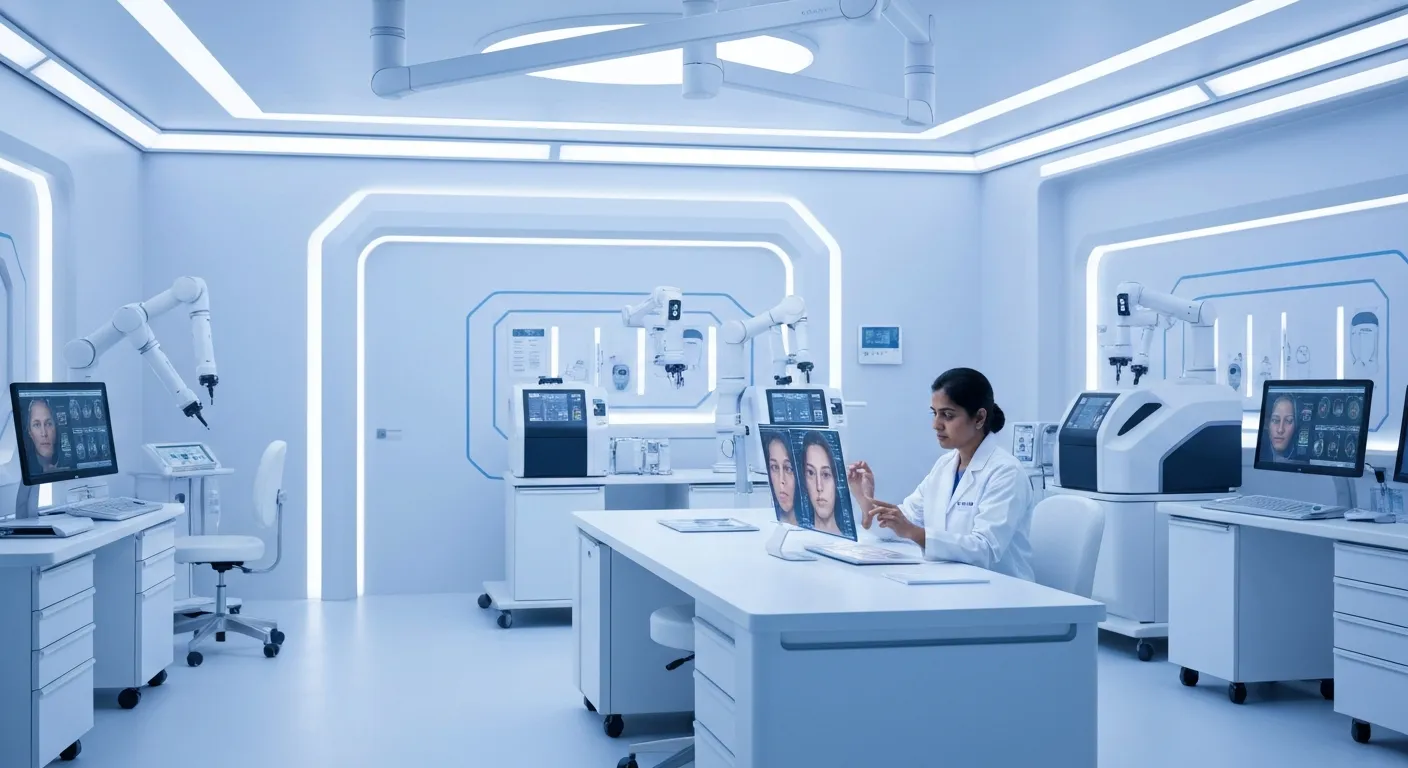
Body contouring has revolutionized the way we think about self-care and aesthetic transformations. It’s more than just a cosmetic procedure—it’s a path to enhanced confidence and self-expression.
Unveiling the New Era of Facial Rejuvenation Surgery
Evolution from Traditional Methods to Cutting-Edge Technology
Facial rejuvenation surgery has undergone a profound transformation fueled by rapid technological advancements. Historically reliant on conventional surgical approaches, the field is now embracing innovative technologies such as three-dimensional (3D) printing, artificial intelligence (AI), and tissue engineering. These tools allow for unprecedented precision in surgical planning and execution, fundamentally shifting how surgeons address aging and tissue loss.
Innovative Techniques Enhancing Precision and Personalization
The integration of 3D imaging and printing enables creation of patient-specific implants and surgical guides, ensuring a custom fit and improved aesthetic outcomes. AI applications facilitate enhanced image analysis, surgical outcome prediction, and virtual simulations, which aid in tailoring procedures to individual anatomy and expectations. Additionally, minimally invasive procedures like thread lifts and ultrasonic rhinoplasty reduce tissue trauma while maximizing natural-looking results.
Advancements Driving Improved Patient Outcomes and Recovery
Modern technologies contribute to safer surgeries with shorter operative times and reduced recovery periods. Minimally invasive methods coupled with regenerative medicine techniques—such as fat grafting and stem cell therapy—support enhanced wound healing and tissue regeneration. Patients benefit from less scarring, faster return to daily activities, and durable rejuvenation effects that closely mimic natural aging processes, representing a leap forward from traditional facelift methods.
This new era not only improves clinical outcomes but also elevates patient satisfaction by aligning technological innovation with individualized care.
Pioneering Technologies in Surgical and Non-Surgical Facial Rejuvenation

What are the benefits of minimally invasive procedures in facial rejuvenation?
Minimally invasive facial rejuvenation techniques are rapidly gaining popularity due to their reduced downtime, minimal scarring, and natural-looking results. Procedures like thread lifts for skin tightening use dissolvable sutures that tighten sagging skin while stimulating collagen production, providing subtle lifts without the need for extensive surgery. The mid-face lift, a targeted approach addressing the cheek area, offers early intervention for aging signs with minimal incisions. Additionally, advanced methods like the deep plane facelift reposition deeper tissues for longer-lasting, natural outcomes but with faster recovery compared to traditional facelifts.
How have laser technologies evolved for skin resurfacing and rejuvenation?
Laser technology in skin rejuvenation has seen significant advancements. Fractional lasers for minimal downtime now allow precise skin resurfacing with minimal downtime, promoting collagen regeneration to reduce wrinkles and improve skin texture. Ablative lasers for precise tissue vaporization offer targeted vaporization of damaged tissue, whereas non-ablative lasers promoting collagen production while preserving the skin surface. Innovations like hybrid and picosecond lasers address a broader range of skin concerns safely, even for ethnic skin types, reducing risks such as hyperpigmentation and scarring.
What role do injectables, biostimulants, and fat grafting play in natural volume restoration?
Injectable biostimulants including products like Radiesse Plus and Sculptra stimulate the body's natural collagen production, resulting in long-lasting and natural facial rejuvenation. Dermal fillers based on hyaluronic acid restore facial contours and volume with effects that can last from months to years. Fat grafting, particularly the use of nanofat, not only improves volume but also enhances skin quality by delivering stem cells and growth factors that encourage tissue regeneration. These techniques provide a holistic approach to youthful restoration, minimizing adverse reactions by utilizing autologous tissue or bio-compatible substances.
What are the emerging trends in non-surgical facial interventions?
Non-surgical treatments are evolving with technologies like microneedling combined with radiofrequency (RF), which induce collagen and elastin production resulting in tighter, smoother skin. Procedures such as Ultherapy and radiofrequency-based devices offer skin tightening without incisions. Cryolipolysis (CoolSculpting) provides non-invasive fat reduction targeting areas like the double chin. Advanced thread lifts with dissolvable cones or barbs improve sagging skin appearance, compatible with modern lifestyle demands. Moreover, personalized plans integrating genetic profiling and AI-driven diagnostics are revolutionizing treatment customization for enhanced patient satisfaction.
These technological advancements collectively offer patients a spectrum of options—from subtle improvements to more comprehensive rejuvenation—that emphasize safety, efficacy, and natural aesthetics, underscoring the dynamic future of facial rejuvenation.
The Role of Artificial Intelligence and 3D Printing in Personalized Facial Surgery
AI-assisted surgical planning and image analysis
Artificial intelligence (AI) has become a transformative tool in facial surgery, facilitating surgical planning and detailed image analysis. AI algorithms, especially Convolutional Neural Networks in facial recognition, can analyze facial images to detect subtle changes in skin texture, symmetry, and anatomical structures. This allows surgeons to create precise, personalized treatment plans tailored to individual facial features, improving outcomes and patient understanding. AI also aids in simulating surgical results, helping patients visualize potential changes before the procedure.
3D printing of patient-specific implants and surgical guides
Three-dimensional (3D) printing technology enables the production of 3D printing for patient-specific craniofacial implants, surgical guides, and anatomical models, greatly enhancing precision in facial surgeries. Customized implants perfectly match the patient's anatomy, improving integration and aesthetic results. Surgical guides streamline complex procedures by delineating exact osteotomy or incision lines, reducing operative time and increasing accuracy. This technology has revolutionized craniofacial reconstruction and cosmetic procedures alike.
Machine learning applications for outcome prediction and training
Machine learning, a branch of AI, supports outcome prediction by analyzing large datasets to forecast surgical results and potential complications. Predictive models can assess risks like flap viability or post-operative recovery, enabling surgeons to optimize treatment strategies. Moreover, AI-driven simulation platforms enhance surgical training by providing realistic procedural practice and feedback, improving skill acquisition and decision-making.
Ethical and data challenges in AI deployment
Despite these advances, AI integration faces challenges related to data privacy, bias, and regulatory oversight. The need for large, diverse, ethically sourced datasets is critical to ensure AI models perform equitably among different populations. Concerns include algorithmic biases that may under-represent certain ethnicities or genders, potentially leading to less accurate or fair treatment planning. Compliance with data protection laws such as GDPR and transparent clinician involvement in AI design are vital to maintain patient trust and ensure safe, responsible adoption. For more details, see Ethical considerations in AI data use and Challenges of AI integration in plastic surgery.
Innovations in Tissue Engineering and Regenerative Medicine
Tissue Engineering and Regenerative Medicine as Alternatives to Traditional Grafts
Tissue engineering in craniofacial reconstruction (TE) and regenerative medicine applications (RM) are revolutionizing facial reconstruction by offering promising alternatives to traditional grafting methods. By integrating living cells, biocompatible scaffolds for improved graft integration, signaling molecules, and gene manipulation techniques, these approaches strive to restore damaged craniofacial tissues more effectively while reducing complications associated with graft rejection.
Decellularization-Recellularization Techniques
The decellularization-recellularization technique (D/R) process is a major advancement where donor tissues are stripped of their native cells, leaving behind a scaffold that retains the original extracellular matrix architecture. These scaffolds can then be repopulated with a patient’s own cells, promoting regeneration and minimizing immune rejection. This technique holds significant potential in creating functional soft tissue and bone grafts customized for individual patients.
Acellular Dermal Matrix and Stem Cell Therapies
Acellular dermal matrix benefits (ADM) represents a widely used scaffold derived by removing cellular components from donor dermis, utilized in soft tissue reconstruction and wound healing. ADM reduces immunogenicity and enhances integration compared to conventional grafts. Additionally, stem cells, including resident stem cells and human-induced pluripotent stem cells (HiPSCs), play an essential role by providing cellular sources capable of regenerating soft tissues and bone. These therapies show promise for personalized and effective facial tissue repair.
Bioprinting and Induced Pluripotent Stem Cells for Tissue Regeneration
Bioprinting technologies enable the precise deposition of living cells and biomaterials layer-by-layer to fabricate complex tissues such as skin and cartilage in situ. This innovative approach aims to produce patient-specific grafts with high fidelity to natural tissue structures. Complementing this, human-induced pluripotent stem cells in tissue regeneration offer an exciting avenue for regenerative medicine by providing versatile cell sources for inducing tissue regeneration, minimizing rejection risks, and advancing the future of personalized craniofacial reconstruction.
Combined, these innovations shape the next generation of facial reconstruction therapies by enhancing outcomes, reducing operative morbidity, and moving toward more natural and lasting tissue restoration.
Cutting-Edge Surgical Techniques Enhancing Longevity and Natural Results
What are deep plane and endoscopic facelift methodologies?
Deep plane and endoscopic facelifts represent advanced surgical techniques that move beyond traditional skin-only lifts. The deep plane facelift addresses underlying facial layers beneath the skin, releasing ligaments and repositioning tissues for longer-lasting, natural results with minimal scarring. Endoscopic facelifts utilize small incisions and camera-guided tools to reduce invasiveness, speed recovery, and achieve precise tissue repositioning.
How does ultrasonic rhinoplasty improve surgical precision?
Ultrasonic rhinoplasty employs piezotome technology—a device delivering ultrasonic vibrations—to reshape nasal bones with millimeter precision. This reduces tissue trauma and complications while enabling faster healing and more refined aesthetic outcomes compared to conventional methods.
What innovations facilitate minimally invasive facial procedures?
Multiplane forehead shortening surgery exemplifies minimally invasive approaches that enhance facial aesthetics with reduced scarring and recovery time. Techniques like thread lifts, RF microneedling, and laser treatments complement surgical efforts by stimulating collagen and tightening skin non-invasively.
How do combined surgical and non-surgical approaches optimize outcomes?
A trend toward personalized facial rejuvenation plans incorporates both surgical lifts and non-surgical modalities such as Botox, dermal fillers, laser resurfacing, and fat grafting. This multimodal strategy enhances volume restoration, skin texture, and facial symmetry, producing natural-looking results with shorter downtime and sustained longevity.
These modern techniques and thoughtful combinations have revolutionized facial rejuvenation by prioritizing safety, precision, and patient-specific aesthetic goals.
Emerging Technologies Enhancing Skin Quality and Rejuvenation

How Are Microneedling with Radiofrequency and Nanofat Injections for Skin Volume Advancing Skin Rejuvenation?
Microneedling combined with radiofrequency (RF) technology delivers controlled micro-injuries alongside RF energy deep into the dermis. This stimulates collagen and elastin production, resulting in firmer, smoother, and more lifted skin after treatment. Procedures like the Profound Procedure utilize ridged needles which enhance the penetration of topical serums such as Hyaluronic Acid Benefits, Vitamin C and Vitamin A in Skin Care and vitamin A, amplifying skin tone and texture improvements.
Nanofat injections involve micro-level fat grafting to increase skin volume and hydration. These injections promote healing and rejuvenation by releasing stem cells and growth factors, helping to restore a youthful appearance especially in areas with volume loss.
What Are the Latest Advances in Laser Technologies?
Advances in laser systems have introduced fractional, picosecond, and hybrid lasers, each targeting different skin concerns with precision and minimal downtime. Fractional lasers are popular for skin resurfacing and collagen induction with reduced recovery time.
Picosecond lasers offer rapid pulse durations to treat pigmentation and wrinkles with enhanced safety. Hybrid lasers combine multiple laser types to effectively address varied dermatological issues such as scars, pigmentation, and vascular lesions, making treatments safer and more versatile across diverse skin types.
What Is the Ellacor® System and How Does Micro-Coring Technology Work?
The Ellacor® system represents a novel, FDA-cleared non-surgical method to remove excess skin without thermal damage. Using hollow needles, the system extracts micro-cores of skin, improving moderate to severe wrinkles without visible scarring.
This micro-coring approach promotes natural skin tightening and remodeling, yielding smoother skin texture with minimal side effects such as redness and swelling. It has gained recognition for its safety and efficacy in clinical studies, especially for the mid to lower face rejuvenation.
How Do Combination Therapies and Topical Enhancements Improve Outcomes?
Combination treatments enhance rejuvenation results by utilizing microneedling/RF alongside topical serums that penetrate more deeply through microchannels created by needles. This synergy boosts the delivery of antioxidants and hydrating agents.
Additionally, integrating nanofat grafting with RF treatments stimulates stem cells and growth factors, enhancing dermal regeneration. These multimodal approaches optimize collagen production, skin hydration, and overall texture, offering tailored rejuvenation plans to meet various aesthetic goals.
Safety, Accessibility, and Global Trends in Facial Rejuvenation Technology
How is procedural safety being improved in facial rejuvenation surgeries?
Advancements in facial rejuvenation technology have notably enhanced patient safety. Real-time monitoring devices during surgery enable surgeons to observe vital parameters and blood flow, allowing immediate intraoperative adjustments to reduce complications. The introduction of robotic surgery, although gradually adopted, offers increased precision for complex reconstructive tasks, limiting tissue trauma and improving outcomes.
Innovations such as 3D imaging and virtual simulation technologies also enhance surgical planning, leading to more accurate procedures and reduced risks. Technologies like radiofrequency-assisted surgery stimulate collagen production with minimal downtime while maintaining safety.
What are the global disparities in access to facial rejuvenation technologies?
Despite significant technological advances, a marked global disparity persists in access to cutting-edge facial rejuvenation treatments. High-income countries benefit from widespread integration of AI-assisted procedures, 3D printing, and minimally invasive techniques, whereas low- and middle-income countries (LMICs) face challenges due to limited resources and infrastructure.
Efforts to bridge this gap emphasize collaborative research, affordable technology development, and equitable healthcare partnerships. Enhancing practitioner training and ensuring the availability of qualified specialists are also critical to increasing accessibility worldwide.
What trends are driving preferences for natural and minimally invasive facial rejuvenation?
Current trends prioritize natural appearance, minimal invasiveness, and faster recovery times. Procedures like microneedling combined with radiofrequency, thread lifts using dissolvable sutures, and nanofat injections represent this shift toward subtle and effective rejuvenation.
Non-surgical treatments including Ultherapy, injectable biostimulants, and laser therapies promote collagen synthesis and skin tightening without extensive downtime, aligning with patient desires for less disruption.
Why is patient education and choosing qualified practitioners crucial?
Patient safety and satisfaction heavily depend on thorough education about available procedures, potential risks, and realistic outcomes. Qualified, board-certified surgeons trained in the latest technologies ensure personalized treatment plans tailored to individual anatomy and goals.
Adequate informed consent processes and transparent communication build patient trust and optimize results while minimizing complications. As new technologies emerge, ongoing practitioner education is vital to uphold high standards of care worldwide.
Future Directions: Genetic, Regenerative, and AI-Driven Transformations
Gene Editing and Regenerative Medicine Potentials
The future of facial rejuvenation is poised to be transformed by genetic and regenerative medicine innovations. Technologies like CRISPR-Cas9 offer promising avenues to edit skin and flap biology, potentially reversing aging signs and enhancing tissue regeneration. Stem cell therapies, especially those using adipose-derived mesenchymal stem cells (ADSCs) and human-induced pluripotent stem cells (HiPSCs), are advancing the potential for personalized soft tissue and bone regeneration, fostering more natural and long-lasting restoration.
Personalized Treatment Through Genetic Profiling and AI Simulation
Combining genetic profiling with artificial intelligence (AI) permits an unprecedented level of personalization in facial rejuvenation. AI-driven models can simulate surgical and non-surgical outcomes, predict complication risks, and optimize treatment sequences tailored to individual genetic makeup and anatomical features. These personalized strategies enhance patient satisfaction by setting realistic expectations and improving functional and aesthetic results.
Integration of AI with Bioprinting and Virtual Reality for Customized Therapy
AI's synergy with bioprinting and virtual reality (VR) technologies is setting new standards in customized facial reconstruction. Bioprinting enables the deposition of living cells into scaffolds forming patient-specific skin and cartilage implants. Meanwhile, VR and 3D imaging, powered by AI, facilitate precise surgical planning and immersive patient consultations. Together, these technologies promise to reduce operative time and recovery, achieving highly accurate and natural outcomes.
Ethical Considerations and Need for Multi-Disciplinary Research
While promising, these advancements bring ethical and practical concerns such as data privacy, algorithm biases, and equitable access. Ensuring responsible integration necessitates multi-disciplinary collaboration among clinicians, researchers, ethicists, and regulators. Strict governance, inclusive datasets, and transparent protocols will be essential to maintain patient trust and extend innovative therapies fairly across diverse populations.
Embracing Technology for the Future of Facial Rejuvenation
Transforming Outcomes and Patient Care with Technology
Advancements in technology are revolutionizing facial rejuvenation, elevating precision, safety, and patient satisfaction. Innovations such as 3D printing create patient-specific implants and surgical guides, enhancing surgical accuracy. Laser treatments, radiofrequency devices, and microneedling stimulate collagen production, promoting natural skin rejuvenation with minimal downtime. Meanwhile, regenerative medicine techniques like stem cell therapy and bioprinting are enabling personalized tissue regeneration and faster recovery.
AI's Supportive Role Alongside Human Expertise
Artificial intelligence (AI) plays a growing role in surgical planning, image analysis, and outcome prediction. AI tools assist surgeons by simulating results and analyzing facial features, improving decision-making and patient communication. However, AI is designed to complement—not replace—clinical judgment. Ethical considerations, data privacy, and algorithmic biases necessitate careful integration of AI, ensuring that expert surgeons guide its application for optimal care.
Innovations Shaping Safer, More Effective Rejuvenation
Ongoing technological progress continues to deliver less invasive procedures with natural-looking outcomes. Techniques like ultrasonically-assisted rhinoplasty, thread lifts, and non-surgical laser therapies reduce recovery time and scarring. Emerging gene editing and regenerative medicine promise to further enhance skin quality and longevity of results. This dynamic blend of technology and expertise paves the way to safer, personalized, and more effective facial rejuvenation solutions.
Heading





Locations


© 2014 - 2025. Thomas W. Loeb | Board Certified Plastic Surgeon