



.svg)
.svg)


Finding the Right Neck Rejuvenation Path for You
News
/
April 17, 2026
Neck Lift vs. Platysmaplasty: Which Procedure Is Right for You?
Finding the Right Neck Rejuvenation Path for You

Body contouring has revolutionized the way we think about self-care and aesthetic transformations. It’s more than just a cosmetic procedure—it’s a path to enhanced confidence and self-expression.
An Overview of Neck Rejuvenation at Dr. Loeb’s Manhattan Practice
Neck rejuvenation at Dr. Thomas W. Loeb’s boutique Manhattan practice begins with a thorough analysis of the neck’s anatomy. The surgeon addresses the skin, subcutaneous fat, the platysma muscle, deeper fat compartments, and the mandibular‑submental fascial layers, each contributing to banding, laxity, and contour loss. The practice offers three core surgical options: (1) platysmaplasty, which tightens or repositions the platysma to eliminate vertical cords and sharpen jawline definition; (2) cervicoplasty, which removes excess skin and redrapes tissue for patients with pronounced skin redundancy; and (3) a mini‑neck lift, a less invasive approach using smaller hidden incisions for modest skin laxity and banding. Dr. Loeb’s personalized, boutique model tailors the chosen technique to the patient’s unique anatomy, aesthetic goals, and health status, ensuring natural‑looking, long‑lasting results.
Platysmaplasty: Worth, Pain, Recovery, and Cost

Why platysmaplasty can be a valuable option: For patients with prominent vertical platysmal bands, a blurred jawline, or modest excess skin, platysmaplasty tightens the platysma and can be combined with liposuction or skin excision to produce a smoother, more defined neck. When performed by a board‑certified surgeon such as Dr. Thomas W. Loeb in Manhattan, the results are natural‑looking and long‑lasting, complementing facelifts or other facial rejuvenation.
Is platysmaplasty worth it? Yes—its targeted muscle tightening offers meaningful contour improvement with a relatively short downtime, making it an efficient solution for younger patients with good skin elasticity and older patients with moderate laxity.
How painful is neck lift recovery? Discomfort is mild to moderate, peaking in the first few days and managed with prescribed analgesics for 3‑5 days. Swelling and a tight sensation usually subside within one week, allowing light activities by day 5‑7 and return to work in 10‑14 days.
Is platysmaplasty painful? The surgery itself is pain‑free under anesthesia; postoperative soreness is modest and resolves within two weeks with proper head elevation, activity restriction, and medication.
What is the average cost of a platysmaplasty? In New York City, typical fees range from $7,000 to $10,000, covering surgeon fees, anesthesia, and postoperative care. Costs vary with the extent of additional procedures such as liposuction or skin excision.
Neck Lift (Cervicoplasty) and Mini‑Neck Lift: What to Expect
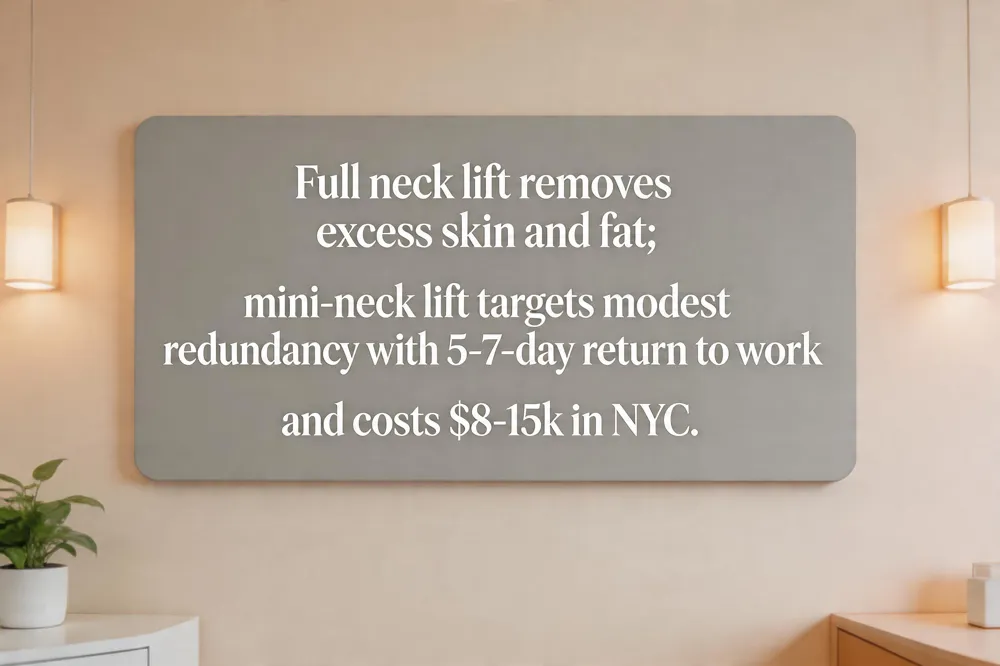
A full neck lift (cervicoplasty) removes excess skin, fat, and often incorporates platysmaplasty to tighten the platysma muscle, while a mini‑neck lift is a less invasive variant that targets only modest skin redundancy and mild banding with smaller incisions hidden behind the ear or under the chin.
Recovery timeline – Recovery from a mini neck lift is typically swift, with most patients feeling comfortable enough to return to work and light daily activities within five to seven days. Swelling and bruising peak in the first 24–72 hours and subside over the next two weeks; by the end of week two the neck looks refined for social events, and full contour is evident by week three. Strenuous activity should be avoided for at least two weeks.
Cost in NYC – In New York City, a mini neck lift generally ranges from $8,000 to $15,000, with high‑end practices quoting $12,000 to $20,000 depending on surgeon expertise and facility fees. Dr. Thomas W. Loeb’s boutique practice provides an itemized estimate after consultation, with transparent pricing and financing options.
Newest minimally invasive technique – The latest neck‑lift option is the My Ellevate® thread‑based procedure, which uses percutaneous sutures and radio‑frequency energy to tighten skin and sculpt the jawline. Performed awake, it offers 1‑2 weeks of downtime, minimal scarring, and results lasting at least five years. Dr. Loeb offers this cutting‑edge “Reveal Tri‑Neck” approach for patients seeking a less invasive alternative to traditional open surgery.
Deciding Between Platysmaplasty and a Full Neck Lift

Both platysmaplasty and a full neck lift (cervicoplasty target neck rejuvenation, but they differ in anatomical focus. Platysmaplasty tightens the platysma muscle to eliminate vertical cords and improve jawline definition; it is ideal for patients with good skin elasticity, prominent platysmal bands, and minimal skin laxity. A full neck lift adds skin excision and fat removal, correcting excess skin, a double‑chin, and broader contour deficiencies. When the primary concern is muscle banding, a muscle‑only procedure—often combined with modest liposuction—provides a natural, long‑lasting result with a shorter recovery (about 1‑2 weeks). For loose, sagging skin or significant submental fat, a combined cervicoplasty plus platysmaplasty offers the most comprehensive improvement.
Platysmaplasty vs. neck lift – which is right for me? If vertical bands dominate and skin is tight, choose platysmaplasty; if excess skin or chin fat is present, opt for a full neck lift.
Best non‑surgical treatment for loose neck skin? Collagen‑stimulating ultrasound (Sofwave) or radio‑frequency Ultherapy delivers mid‑dermal heating for tightening with minimal downtime.
How to tighten neck skin naturally? Hydrate, use daily sunscreen, follow a vitamin‑C‑rich diet, apply peptide or retinol serums, and perform gentle neck‑strengthening exercises; professional laser or RF sessions can augment these habits.
Post‑Operative Care: What to Avoid and How to Support Healing

After a platysmaplasty or cervicoplasty, patients must steer clear of activities that increase neck strain or bleeding. For the first two weeks, avoid lifting, pushing, or pulling objects heavier than 2 lb, and refrain from any strenuous exercise, heavy lifting, or intense workouts for at least six weeks. Do not bend over, twist the neck, or sleep on the side or stomach; instead, keep the head elevated on the back while sleeping. Smoking, nicotine, alcohol, caffeine, and NSAIDs such as aspirin or ibuprofen should be avoided for two weeks before and after surgery because they impair healing and heighten swelling and bruising. Limit wide‑gaped chewing, loud talking, and vigorous facial expressions during the early recovery phase, and follow all post‑operative instructions without deviation. Compliance is crucial: it minimizes complications, ensures the sutures hold, and allows the tightened platysma and redraped skin to settle properly, leading to optimal, long‑lasting contour. Supporting healing includes wearing the prescribed neck garment, applying cool compresses, staying well‑hydrated, maintaining a balanced diet rich in protein and vitamins, and protecting the incision sites from sun exposure with sunscreen or silicone scar‑care products. Regular follow‑up visits with Dr. Loeb enable timely assessment of swelling, nerve sensation, and scar maturation, further enhancing the durability of the result.
Effectiveness and Longevity of Neck Tightening Procedures

A surgical neck lift (lower rhytidectomy) combined with platysmaplasty is the gold‑standard for patients with moderate‑to‑severe laxity. This approach tightens the platysma muscle, excises excess skin, and can remove submental fat, delivering a smooth, defined jawline and lasting contour that non‑surgical methods cannot achieve. For mild skin laxity or early‑stage banding, advanced non‑invasive technologies—such as Sofwave ultrasound, Ultherapy, or radio‑frequency devices (Thermage, INTRAcel)—stimulate collagen remodeling and provide noticeable improvement after multiple sessions, though results are less dramatic and less durable than surgery. Durability of any neck‑tightening outcome depends on skin quality, age, lifestyle factors (smoking, sun exposure), weight stability, and adherence to post‑operative care. When performed by a board‑certified surgeon like Dr. Thomas W. Loeb, surgical platysmaplasty and cervicoplasty yield lasting results for years, while non‑surgical adjuncts are best reserved for patients with minimal laxity or those seeking a temporary, low‑downtime option.
Your Personalized Path to a Refined Neck
The first step toward a harmonious neck contour is matching your anatomy, aesthetic goals, and lifestyle. Patients with tight, elastic skin but prominent platysmal bands often benefit from a focused platysmaplasty, while those with significant skin redundancy, weight‑loss‑induced laxity, or a double chin are better candidates for a cervicoplasty‑type neck lift that removes excess skin and may include liposuction. In both scenarios, a thorough assessment of health status, non‑smoking history, and realistic expectations guides the optimal plan.
Dr. Thomas W. Loeb’s boutique Manhattan practice emphasizes a board‑certified, personalized approach. By tailoring incision placement (hidden behind the ear or under the chin) and selecting anesthesia—local with sedation for modest corrections or general for comprehensive lifts—he minimizes scarring and downtime while delivering natural‑looking results.
To begin, schedule a detailed consultation with Dr. Loeb. Bring photos, a list of medications, and a clear description of your desired outcome. The office will conduct a physical evaluation, discuss risks and recovery timelines, and outline a customized surgical roadmap that aligns with your unique anatomy and lifestyle.
An Overview of Neck Rejuvenation at Dr. Loeb’s Manhattan Practice
Neck rejuvenation at Dr. Thomas W. Loeb’s boutique Manhattan practice begins with a thorough analysis of the neck’s anatomy. The surgeon addresses the skin, subcutaneous fat, the platysma muscle, deeper fat compartments, and the mandibular‑submental fascial layers, each contributing to banding, laxity, and contour loss. The practice offers three core surgical options: (1) platysmaplasty, which tightens or repositions the platysma to eliminate vertical cords and sharpen jawline definition; (2) cervicoplasty, which removes excess skin and redrapes tissue for patients with pronounced skin redundancy; and (3) a mini‑neck lift, a less invasive approach using smaller hidden incisions for modest skin laxity and banding. Dr. Loeb’s personalized, boutique model tailors the chosen technique to the patient’s unique anatomy, aesthetic goals, and health status, ensuring natural‑looking, long‑lasting results.
Platysmaplasty: Worth, Pain, Recovery, and Cost
Why platysmaplasty can be a valuable option: For patients with prominent vertical platysmal bands, a blurred jawline, or modest excess skin, platysmaplasty tightens the platysma and can be combined with liposuction or skin excision to produce a smoother, more defined neck. When performed by a board‑certified surgeon such as Dr. Thomas W. Loeb in Manhattan, the results are natural‑looking and long‑lasting, complementing facelifts or other facial rejuvenation.
Is platysmaplasty worth it? Yes—its targeted muscle tightening offers meaningful contour improvement with a relatively short downtime, making it an efficient solution for younger patients with good skin elasticity and older patients with moderate laxity.
How painful is neck lift recovery? Discomfort is mild to moderate, peaking in the first few days and managed with prescribed analgesics for 3‑5 days. Swelling and a tight sensation usually subside within one week, allowing light activities by day 5‑7 and return to work in 10‑14 days.
Is platysmaplasty painful? The surgery itself is pain‑free under anesthesia; postoperative soreness is modest and resolves within two weeks with proper head elevation, activity restriction, and medication.
What is the average cost of a platysmaplasty? In New York City, typical fees range from $7,000 to $10,000, covering surgeon fees, anesthesia, and postoperative care. Costs vary with the extent of additional procedures such as liposuction or skin excision.
Neck Lift (Cervicoplasty) and Mini‑Neck Lift: What to Expect
A full neck lift (cervicoplasty) removes excess skin, fat, and often incorporates platysmaplasty to tighten the platysma muscle, while a mini‑neck lift is a less invasive variant that targets only modest skin redundancy and mild banding with smaller incisions hidden behind the ear or under the chin.
Recovery timeline – Recovery from a mini neck lift is typically swift, with most patients feeling comfortable enough to return to work and light daily activities within five to seven days. Swelling and bruising peak in the first 24–72 hours and subside over the next two weeks; by the end of week two the neck looks refined for social events, and full contour is evident by week three. Strenuous activity should be avoided for at least two weeks.
Cost in NYC – In New York City, a mini neck lift generally ranges from $8,000 to $15,000, with high‑end practices quoting $12,000 to $20,000 depending on surgeon expertise and facility fees. Dr. Thomas W. Loeb’s boutique practice provides an itemized estimate after consultation, with transparent pricing and financing options.
Newest minimally invasive technique – The latest neck‑lift option is the My Ellevate® thread‑based procedure, which uses percutaneous sutures and radio‑frequency energy to tighten skin and sculpt the jawline. Performed awake, it offers 1‑2 weeks of downtime, minimal scarring, and results lasting at least five years. Dr. Loeb offers this cutting‑edge “Reveal Tri‑Neck” approach for patients seeking a less invasive alternative to traditional open surgery.
Deciding Between Platysmaplasty and a Full Neck Lift
Both platysmaplasty and a full neck lift (cervicoplasty target neck rejuvenation, but they differ in anatomical focus. Platysmaplasty tightens the platysma muscle to eliminate vertical cords and improve jawline definition; it is ideal for patients with good skin elasticity, prominent platysmal bands, and minimal skin laxity. A full neck lift adds skin excision and fat removal, correcting excess skin, a double‑chin, and broader contour deficiencies. When the primary concern is muscle banding, a muscle‑only procedure—often combined with modest liposuction—provides a natural, long‑lasting result with a shorter recovery (about 1‑2 weeks). For loose, sagging skin or significant submental fat, a combined cervicoplasty plus platysmaplasty offers the most comprehensive improvement.
Platysmaplasty vs. neck lift – which is right for me? If vertical bands dominate and skin is tight, choose platysmaplasty; if excess skin or chin fat is present, opt for a full neck lift.
Best non‑surgical treatment for loose neck skin? Collagen‑stimulating ultrasound (Sofwave) or radio‑frequency Ultherapy delivers mid‑dermal heating for tightening with minimal downtime.
How to tighten neck skin naturally? Hydrate, use daily sunscreen, follow a vitamin‑C‑rich diet, apply peptide or retinol serums, and perform gentle neck‑strengthening exercises; professional laser or RF sessions can augment these habits.
Post‑Operative Care: What to Avoid and How to Support Healing
After a platysmaplasty or cervicoplasty, patients must steer clear of activities that increase neck strain or bleeding. For the first two weeks, avoid lifting, pushing, or pulling objects heavier than 2 lb, and refrain from any strenuous exercise, heavy lifting, or intense workouts for at least six weeks. Do not bend over, twist the neck, or sleep on the side or stomach; instead, keep the head elevated on the back while sleeping. Smoking, nicotine, alcohol, caffeine, and NSAIDs such as aspirin or ibuprofen should be avoided for two weeks before and after surgery because they impair healing and heighten swelling and bruising. Limit wide‑gaped chewing, loud talking, and vigorous facial expressions during the early recovery phase, and follow all post‑operative instructions without deviation. Compliance is crucial: it minimizes complications, ensures the sutures hold, and allows the tightened platysma and redraped skin to settle properly, leading to optimal, long‑lasting contour. Supporting healing includes wearing the prescribed neck garment, applying cool compresses, staying well‑hydrated, maintaining a balanced diet rich in protein and vitamins, and protecting the incision sites from sun exposure with sunscreen or silicone scar‑care products. Regular follow‑up visits with Dr. Loeb enable timely assessment of swelling, nerve sensation, and scar maturation, further enhancing the durability of the result.
Effectiveness and Longevity of Neck Tightening Procedures
A surgical neck lift (lower rhytidectomy) combined with platysmaplasty is the gold‑standard for patients with moderate‑to‑severe laxity. This approach tightens the platysma muscle, excises excess skin, and can remove submental fat, delivering a smooth, defined jawline and lasting contour that non‑surgical methods cannot achieve. For mild skin laxity or early‑stage banding, advanced non‑invasive technologies—such as Sofwave ultrasound, Ultherapy, or radio‑frequency devices (Thermage, INTRAcel)—stimulate collagen remodeling and provide noticeable improvement after multiple sessions, though results are less dramatic and less durable than surgery. Durability of any neck‑tightening outcome depends on skin quality, age, lifestyle factors (smoking, sun exposure), weight stability, and adherence to post‑operative care. When performed by a board‑certified surgeon like Dr. Thomas W. Loeb, surgical platysmaplasty and cervicoplasty yield lasting results for years, while non‑surgical adjuncts are best reserved for patients with minimal laxity or those seeking a temporary, low‑downtime option.
Your Personalized Path to a Refined Neck
The first step toward a harmonious neck contour is matching your anatomy, aesthetic goals, and lifestyle. Patients with tight, elastic skin but prominent platysmal bands often benefit from a focused platysmaplasty, while those with significant skin redundancy, weight‑loss‑induced laxity, or a double chin are better candidates for a cervicoplasty‑type neck lift that removes excess skin and may include liposuction. In both scenarios, a thorough assessment of health status, non‑smoking history, and realistic expectations guides the optimal plan.
Dr. Thomas W. Loeb’s boutique Manhattan practice emphasizes a board‑certified, personalized approach. By tailoring incision placement (hidden behind the ear or under the chin) and selecting anesthesia—local with sedation for modest corrections or general for comprehensive lifts—he minimizes scarring and downtime while delivering natural‑looking results.
To begin, schedule a detailed consultation with Dr. Loeb. Bring photos, a list of medications, and a clear description of your desired outcome. The office will conduct a physical evaluation, discuss risks and recovery timelines, and outline a customized surgical roadmap that aligns with your unique anatomy and lifestyle.
Heading
An Overview of Neck Rejuvenation at Dr. Loeb’s Manhattan Practice
Neck rejuvenation at Dr. Thomas W. Loeb’s boutique Manhattan practice begins with a thorough analysis of the neck’s anatomy. The surgeon addresses the skin, subcutaneous fat, the platysma muscle, deeper fat compartments, and the mandibular‑submental fascial layers, each contributing to banding, laxity, and contour loss. The practice offers three core surgical options: (1) platysmaplasty, which tightens or repositions the platysma to eliminate vertical cords and sharpen jawline definition; (2) cervicoplasty, which removes excess skin and redrapes tissue for patients with pronounced skin redundancy; and (3) a mini‑neck lift, a less invasive approach using smaller hidden incisions for modest skin laxity and banding. Dr. Loeb’s personalized, boutique model tailors the chosen technique to the patient’s unique anatomy, aesthetic goals, and health status, ensuring natural‑looking, long‑lasting results.
Platysmaplasty: Worth, Pain, Recovery, and Cost
Why platysmaplasty can be a valuable option: For patients with prominent vertical platysmal bands, a blurred jawline, or modest excess skin, platysmaplasty tightens the platysma and can be combined with liposuction or skin excision to produce a smoother, more defined neck. When performed by a board‑certified surgeon such as Dr. Thomas W. Loeb in Manhattan, the results are natural‑looking and long‑lasting, complementing facelifts or other facial rejuvenation.
Is platysmaplasty worth it? Yes—its targeted muscle tightening offers meaningful contour improvement with a relatively short downtime, making it an efficient solution for younger patients with good skin elasticity and older patients with moderate laxity.
How painful is neck lift recovery? Discomfort is mild to moderate, peaking in the first few days and managed with prescribed analgesics for 3‑5 days. Swelling and a tight sensation usually subside within one week, allowing light activities by day 5‑7 and return to work in 10‑14 days.
Is platysmaplasty painful? The surgery itself is pain‑free under anesthesia; postoperative soreness is modest and resolves within two weeks with proper head elevation, activity restriction, and medication.
What is the average cost of a platysmaplasty? In New York City, typical fees range from $7,000 to $10,000, covering surgeon fees, anesthesia, and postoperative care. Costs vary with the extent of additional procedures such as liposuction or skin excision.
Neck Lift (Cervicoplasty) and Mini‑Neck Lift: What to Expect
A full neck lift (cervicoplasty) removes excess skin, fat, and often incorporates platysmaplasty to tighten the platysma muscle, while a mini‑neck lift is a less invasive variant that targets only modest skin redundancy and mild banding with smaller incisions hidden behind the ear or under the chin.
Recovery timeline – Recovery from a mini neck lift is typically swift, with most patients feeling comfortable enough to return to work and light daily activities within five to seven days. Swelling and bruising peak in the first 24–72 hours and subside over the next two weeks; by the end of week two the neck looks refined for social events, and full contour is evident by week three. Strenuous activity should be avoided for at least two weeks.
Cost in NYC – In New York City, a mini neck lift generally ranges from $8,000 to $15,000, with high‑end practices quoting $12,000 to $20,000 depending on surgeon expertise and facility fees. Dr. Thomas W. Loeb’s boutique practice provides an itemized estimate after consultation, with transparent pricing and financing options.
Newest minimally invasive technique – The latest neck‑lift option is the My Ellevate® thread‑based procedure, which uses percutaneous sutures and radio‑frequency energy to tighten skin and sculpt the jawline. Performed awake, it offers 1‑2 weeks of downtime, minimal scarring, and results lasting at least five years. Dr. Loeb offers this cutting‑edge “Reveal Tri‑Neck” approach for patients seeking a less invasive alternative to traditional open surgery.
Deciding Between Platysmaplasty and a Full Neck Lift
Both platysmaplasty and a full neck lift (cervicoplasty target neck rejuvenation, but they differ in anatomical focus. Platysmaplasty tightens the platysma muscle to eliminate vertical cords and improve jawline definition; it is ideal for patients with good skin elasticity, prominent platysmal bands, and minimal skin laxity. A full neck lift adds skin excision and fat removal, correcting excess skin, a double‑chin, and broader contour deficiencies. When the primary concern is muscle banding, a muscle‑only procedure—often combined with modest liposuction—provides a natural, long‑lasting result with a shorter recovery (about 1‑2 weeks). For loose, sagging skin or significant submental fat, a combined cervicoplasty plus platysmaplasty offers the most comprehensive improvement.
Platysmaplasty vs. neck lift – which is right for me? If vertical bands dominate and skin is tight, choose platysmaplasty; if excess skin or chin fat is present, opt for a full neck lift.
Best non‑surgical treatment for loose neck skin? Collagen‑stimulating ultrasound (Sofwave) or radio‑frequency Ultherapy delivers mid‑dermal heating for tightening with minimal downtime.
How to tighten neck skin naturally? Hydrate, use daily sunscreen, follow a vitamin‑C‑rich diet, apply peptide or retinol serums, and perform gentle neck‑strengthening exercises; professional laser or RF sessions can augment these habits.
Post‑Operative Care: What to Avoid and How to Support Healing
After a platysmaplasty or cervicoplasty, patients must steer clear of activities that increase neck strain or bleeding. For the first two weeks, avoid lifting, pushing, or pulling objects heavier than 2 lb, and refrain from any strenuous exercise, heavy lifting, or intense workouts for at least six weeks. Do not bend over, twist the neck, or sleep on the side or stomach; instead, keep the head elevated on the back while sleeping. Smoking, nicotine, alcohol, caffeine, and NSAIDs such as aspirin or ibuprofen should be avoided for two weeks before and after surgery because they impair healing and heighten swelling and bruising. Limit wide‑gaped chewing, loud talking, and vigorous facial expressions during the early recovery phase, and follow all post‑operative instructions without deviation. Compliance is crucial: it minimizes complications, ensures the sutures hold, and allows the tightened platysma and redraped skin to settle properly, leading to optimal, long‑lasting contour. Supporting healing includes wearing the prescribed neck garment, applying cool compresses, staying well‑hydrated, maintaining a balanced diet rich in protein and vitamins, and protecting the incision sites from sun exposure with sunscreen or silicone scar‑care products. Regular follow‑up visits with Dr. Loeb enable timely assessment of swelling, nerve sensation, and scar maturation, further enhancing the durability of the result.
Effectiveness and Longevity of Neck Tightening Procedures
A surgical neck lift (lower rhytidectomy) combined with platysmaplasty is the gold‑standard for patients with moderate‑to‑severe laxity. This approach tightens the platysma muscle, excises excess skin, and can remove submental fat, delivering a smooth, defined jawline and lasting contour that non‑surgical methods cannot achieve. For mild skin laxity or early‑stage banding, advanced non‑invasive technologies—such as Sofwave ultrasound, Ultherapy, or radio‑frequency devices (Thermage, INTRAcel)—stimulate collagen remodeling and provide noticeable improvement after multiple sessions, though results are less dramatic and less durable than surgery. Durability of any neck‑tightening outcome depends on skin quality, age, lifestyle factors (smoking, sun exposure), weight stability, and adherence to post‑operative care. When performed by a board‑certified surgeon like Dr. Thomas W. Loeb, surgical platysmaplasty and cervicoplasty yield lasting results for years, while non‑surgical adjuncts are best reserved for patients with minimal laxity or those seeking a temporary, low‑downtime option.
Your Personalized Path to a Refined Neck
The first step toward a harmonious neck contour is matching your anatomy, aesthetic goals, and lifestyle. Patients with tight, elastic skin but prominent platysmal bands often benefit from a focused platysmaplasty, while those with significant skin redundancy, weight‑loss‑induced laxity, or a double chin are better candidates for a cervicoplasty‑type neck lift that removes excess skin and may include liposuction. In both scenarios, a thorough assessment of health status, non‑smoking history, and realistic expectations guides the optimal plan.
Dr. Thomas W. Loeb’s boutique Manhattan practice emphasizes a board‑certified, personalized approach. By tailoring incision placement (hidden behind the ear or under the chin) and selecting anesthesia—local with sedation for modest corrections or general for comprehensive lifts—he minimizes scarring and downtime while delivering natural‑looking results.
To begin, schedule a detailed consultation with Dr. Loeb. Bring photos, a list of medications, and a clear description of your desired outcome. The office will conduct a physical evaluation, discuss risks and recovery timelines, and outline a customized surgical roadmap that aligns with your unique anatomy and lifestyle.




Locations


© 2014 - 2025. Thomas W. Loeb | Board Certified Plastic Surgeon